
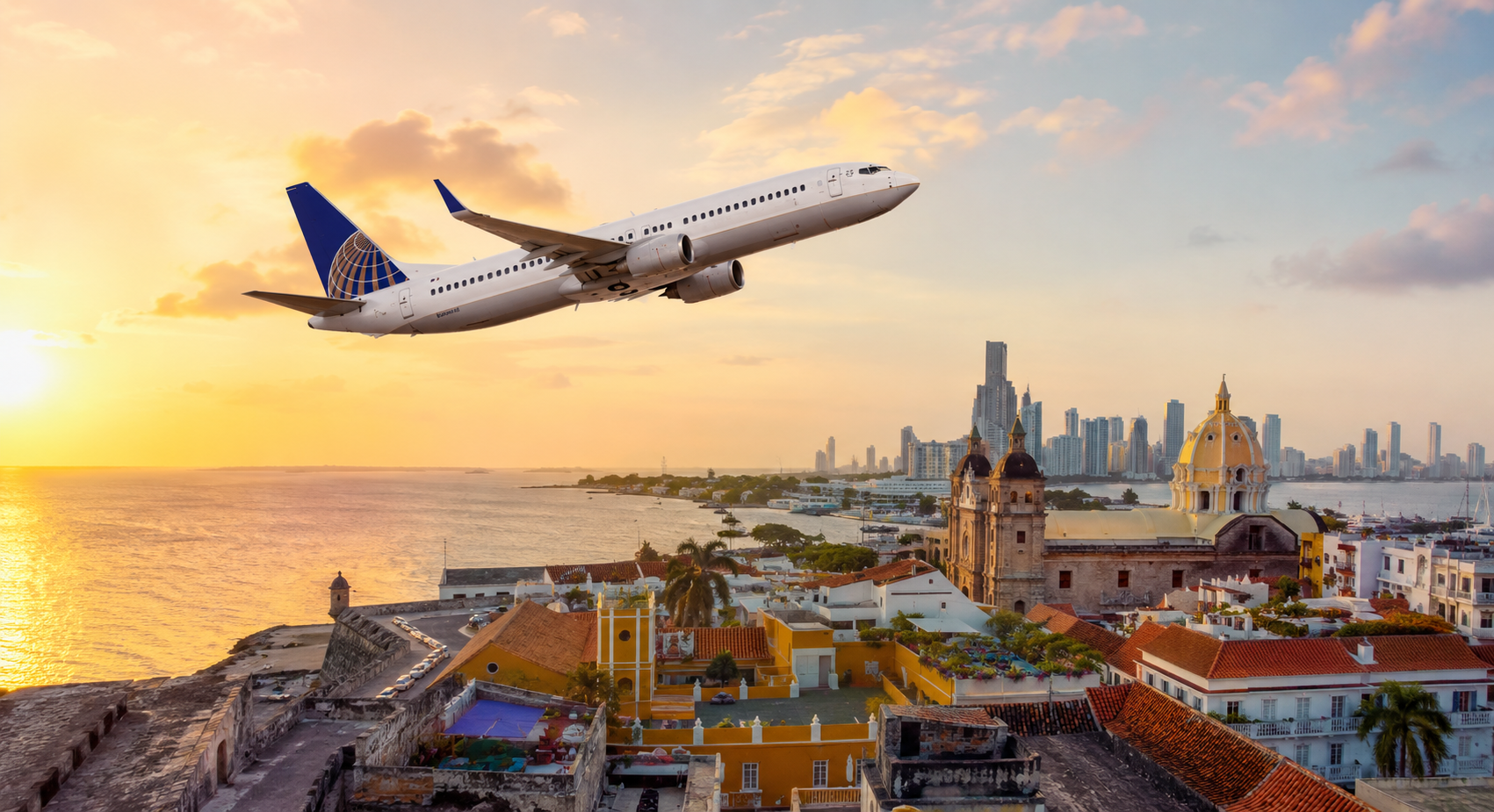
United Airlines Expands Colombia Network With Cartagena
United Airlines is expanding its presence in Latin America with the launch of two new nonstop routes to Cartagena, Colombia, marking another significant step in the carrier’s international growth strategy. Beginning in December 2026, the airline will introduce year-round service from Houston George Bush Intercontinental Airport (IAH) and Washington Dulles International Airport (IAD) to Rafael Núñez International Airport (CTG), making it the first U.S. airline to offer nonstop flights from both cities to Colombia’s Caribbean gateway.
The announcement reinforces United’s long-term commitment to Colombia while highlighting the growing role of the Boeing 737 MAX in opening medium-haul international routes that were traditionally served by larger widebody aircraft. As airlines continue to focus on efficiency and point-to-point connectivity, narrowbody aircraft are increasingly reshaping international networks.
Two New Nonstop Routes Begin in December
Subject to final government approvals, United plans to launch both services on December 17, 2026.
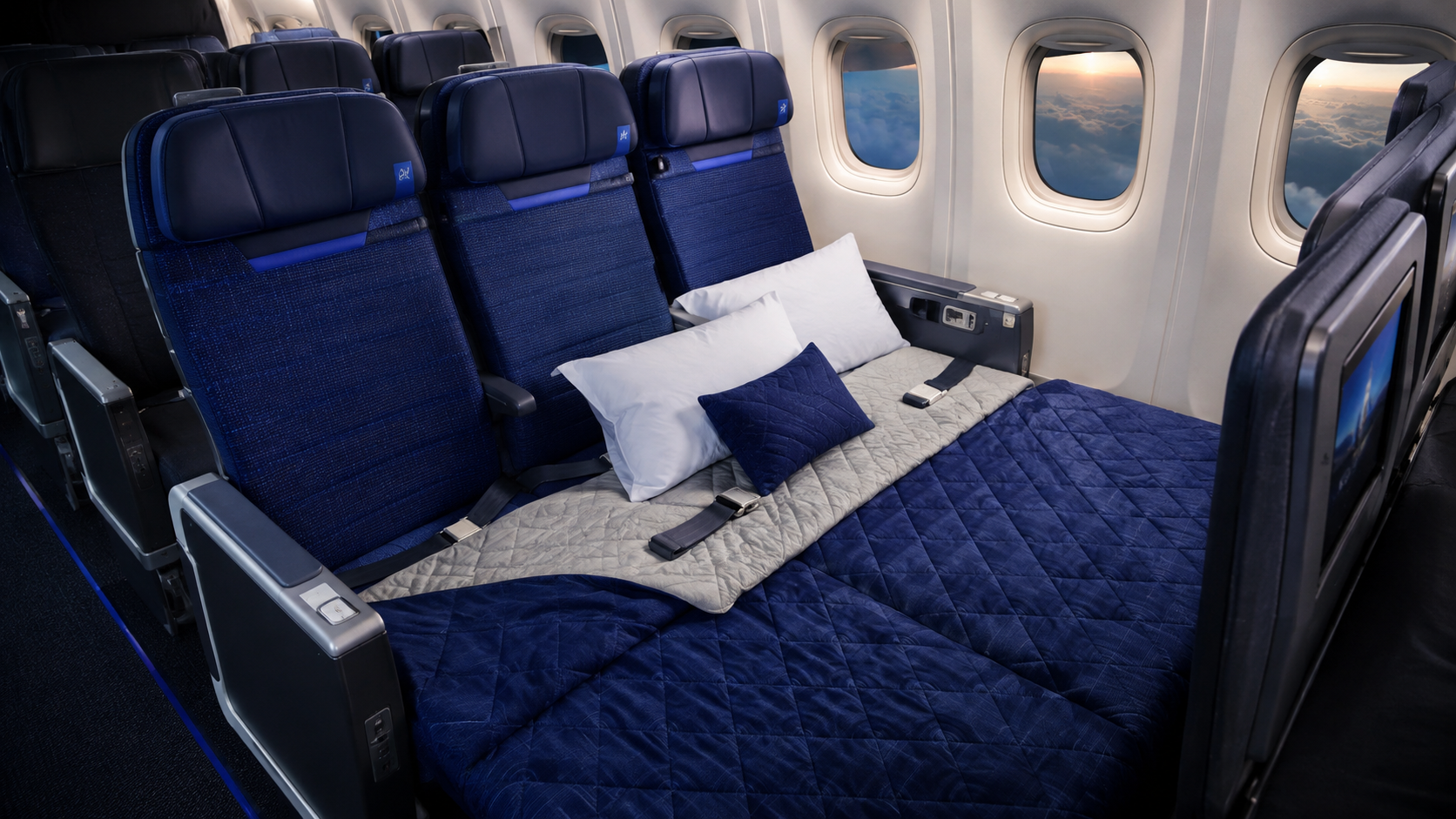
Flights from Houston and Washington Dulles will each operate four times per week during the winter travel season, with departures scheduled every Tuesday, Thursday, Saturday, and Sunday. Both routes will be flown using Boeing 737-family aircraft equipped with United’s latest cabin interiors, including seatback entertainment screens, Bluetooth audio connectivity, larger overhead storage bins, and upgraded passenger amenities.
The airline intends to maintain year-round service on both routes, reflecting confidence in sustained demand for travel between the United States and Colombia’s Caribbean coast.
Flight Schedule Designed for Easy Connections
United has structured both schedules to maximize connectivity through two of its largest hubs.
The Washington Dulles service will depart at 8:20 a.m., arriving in Cartagena at 1:10 p.m. local time. The return flight will leave Cartagena at 4:00 p.m., landing back in the U.S. capital region at 8:40 p.m.
Houston departures are scheduled for 9:35 a.m., arriving in Cartagena at 2:50 p.m. The return service will depart Cartagena at 2:20 p.m., arriving in Houston at 5:45 p.m.
These carefully timed schedules allow travelers from across the United States and Canada to connect conveniently through United’s extensive domestic network, while also providing Colombian passengers with access to more than 70 onward destinations across North America.
For Washington Dulles in particular, the route represents the first nonstop connection between the U.S. capital region and Colombia, offering travelers a faster alternative to connecting through Florida gateways.
Cartagena Becomes United’s Third Colombian Destination
The new routes expand United’s Colombian network to three destinations.
The airline already serves both Bogotá and Medellín, and Cartagena will now become the carrier’s third Colombian destination. While Bogotá remains Colombia’s primary business hub and Medellín has grown into an important commercial and tourism market, Cartagena offers something entirely different.
Located on Colombia’s Caribbean coastline, Cartagena is internationally recognized for its UNESCO-listed colonial old town, beaches, cruise terminal, luxury resorts, and vibrant cultural scene. Over the past decade, the city has emerged as one of Latin America’s fastest-growing leisure destinations, attracting visitors from North America, Europe, and throughout South America.
By adding Cartagena, United broadens its appeal beyond business travelers and strengthens its position in the increasingly competitive leisure travel market.
A Long-Term Commitment to Colombia
United has maintained operations in Colombia for more than three decades, and company executives describe the latest expansion as another milestone in that relationship.
Patrick Quayle, United’s Senior Vice President of Global Network Planning and Alliances, said Colombia has remained an important market throughout the airline’s Latin American expansion.
He noted that the addition of Cartagena reflects United’s ongoing investment in the country while giving customers access to unique travel experiences beyond the country’s traditional gateway cities.
The airline has steadily expanded its Latin American network in recent years, adding new destinations across Mexico, Central America, and the Caribbean as demand for leisure travel continues to outperform many other international markets.
Boeing 737 MAX Continues Expanding Its Role
The Cartagena announcement also illustrates how the Boeing 737 MAX has become central to United’s international network strategy.
Only a decade ago, many routes of this length would have required larger twin-aisle aircraft. Improvements in aircraft efficiency and range now allow airlines to profitably serve thinner international markets using modern narrowbody aircraft.
The 737 MAX delivers lower fuel consumption, reduced operating costs, and greater scheduling flexibility, enabling airlines to launch routes that might not support daily widebody service.
For United, the aircraft has become an important tool for expanding point-to-point flying while maintaining profitability. Rather than funneling all passengers through a handful of major international gateways, the airline can directly connect secondary U.S. cities with high-demand international leisure destinations.
The strategy also gives travelers shorter journey times while reducing the need for additional connections.
Strengthening Houston’s Latin America Hub
Houston has long served as one of United’s most important gateways to Latin America.
George Bush Intercontinental Airport already offers extensive connectivity throughout Mexico, Central America, South America, and the Caribbean. The addition of Cartagena further strengthens the hub’s position by providing travelers with another nonstop option to Colombia.
Passengers arriving from cities across the western United States, Texas, the Midwest, and Canada will now have seamless access to Colombia’s Caribbean coast through Houston.
The airport’s geographic location makes it particularly well suited for connecting traffic heading south into Latin America.
Washington Dulles Gains a Unique Colombia Connection
The Washington Dulles route is equally significant.
Unlike Florida airports, Washington Dulles serves a vast catchment area that includes the U.S. capital region, Northern Virginia, Maryland, Pennsylvania, and portions of the Northeast.
The new service eliminates the need for travelers from those regions to connect through Miami or Fort Lauderdale when visiting Cartagena.
For government travelers, business passengers, and tourists alike, the nonstop flight offers a more convenient option while also strengthening Washington Dulles as United’s international gateway.
Colombia-U.S. Aviation Market Continues to Evolve
United’s announcement comes during a period of significant change in the U.S.-Colombia aviation market.
According to OAG Schedules Analyser data, scheduled nonstop capacity between the United States and Colombia totals approximately 3.8 million two-way seats for the summer 2026 season, representing a 2.7% decline compared with approximately 3.9 million seats during summer 2025.
Flight frequencies have also decreased slightly, falling from 21,386 scheduled flights to 21,112.
Much of the market adjustment follows the collapse of Spirit Airlines, which ceased operations in May 2026. Spirit had previously been one of the largest low-cost operators between the United States and Colombia, offering approximately 497,000 two-way seats during the summer 2025 season.
Before shutting down, the airline operated only about 83,000 seats during summer 2026, leaving a substantial gap in the market.
Other Airlines Continue Expanding
While overall market capacity has declined, several major airlines are increasing their presence.
Avianca is expected to grow its U.S.-Colombia capacity by 17.3% during summer 2026, reaching nearly 1.9 million seats and capturing close to 50% of the market.
American Airlines is also expanding, increasing capacity by 6.1% to approximately 742,000 seats.
United, by comparison, is scheduled to offer roughly 315,000 seats to Colombia during the summer season, representing a 7% reduction year over year. That decrease primarily reflects reduced frequencies on its Houston-Medellín service rather than weaker demand across the broader Colombian market.
The launch of Cartagena services later in the year will help offset some of those reductions while positioning the airline for future growth.
Cartagena Remains an Important Tourism Market
Although Cartagena already receives nonstop flights from American Airlines, Delta Air Lines, and JetBlue Airways, United’s entry introduces two entirely new gateway cities.
Previously, many U.S. travelers relied heavily on Miami, Fort Lauderdale, Atlanta, or New York JFK to reach Cartagena.
Miami remains the largest U.S. market for Cartagena, with approximately 120,000 two-way seats scheduled during summer 2026.
Other major routes include New York JFK, Fort Lauderdale, and Atlanta.
Overall U.S.-Cartagena capacity is expected to decline by approximately 20.4% this year because of Spirit Airlines’ exit, creating opportunities for other carriers to strengthen their presence.
United’s expansion allows the airline to capture demand from travelers seeking convenient connections through Houston and Washington rather than relying on Florida airports.
Colombia’s Tourism Industry Continues to Grow
Cartagena has become one of Colombia’s strongest tourism success stories.
Its historic walled city, Caribbean coastline, luxury hotels, cruise port, and growing international profile have helped attract millions of visitors annually.
The destination appeals to a wide range of travelers, including leisure tourists, cruise passengers, destination wedding groups, and luxury vacationers.
The city’s popularity has also increased among American travelers seeking Caribbean experiences beyond traditional island destinations.
For United, serving Cartagena complements its existing Colombian network by offering customers a different travel experience while strengthening relationships with Colombia’s tourism sector.
Looking Ahead
United Airlines’ decision to launch nonstop flights from Houston and Washington Dulles to Cartagena represents more than the addition of two new routes.
The expansion reflects several broader trends shaping today’s aviation industry: growing demand for leisure travel, increased use of fuel-efficient narrowbody aircraft on international routes, and airlines’ focus on offering more nonstop services outside traditional gateway airports.
By becoming the first U.S. carrier to connect both Houston and Washington directly with Cartagena, United is positioning itself to capture growing demand for travel to Colombia while reinforcing its role as one of the leading U.S. airlines serving Latin America.
As the competitive landscape continues to evolve following changes in airline capacity and shifting market dynamics, Cartagena appears well-positioned to become an increasingly important destination within United’s expanding international network.
For more on United Airlines, see: United Airlines Targets Full Recovery as Airfares Stay High

Leave a Reply