
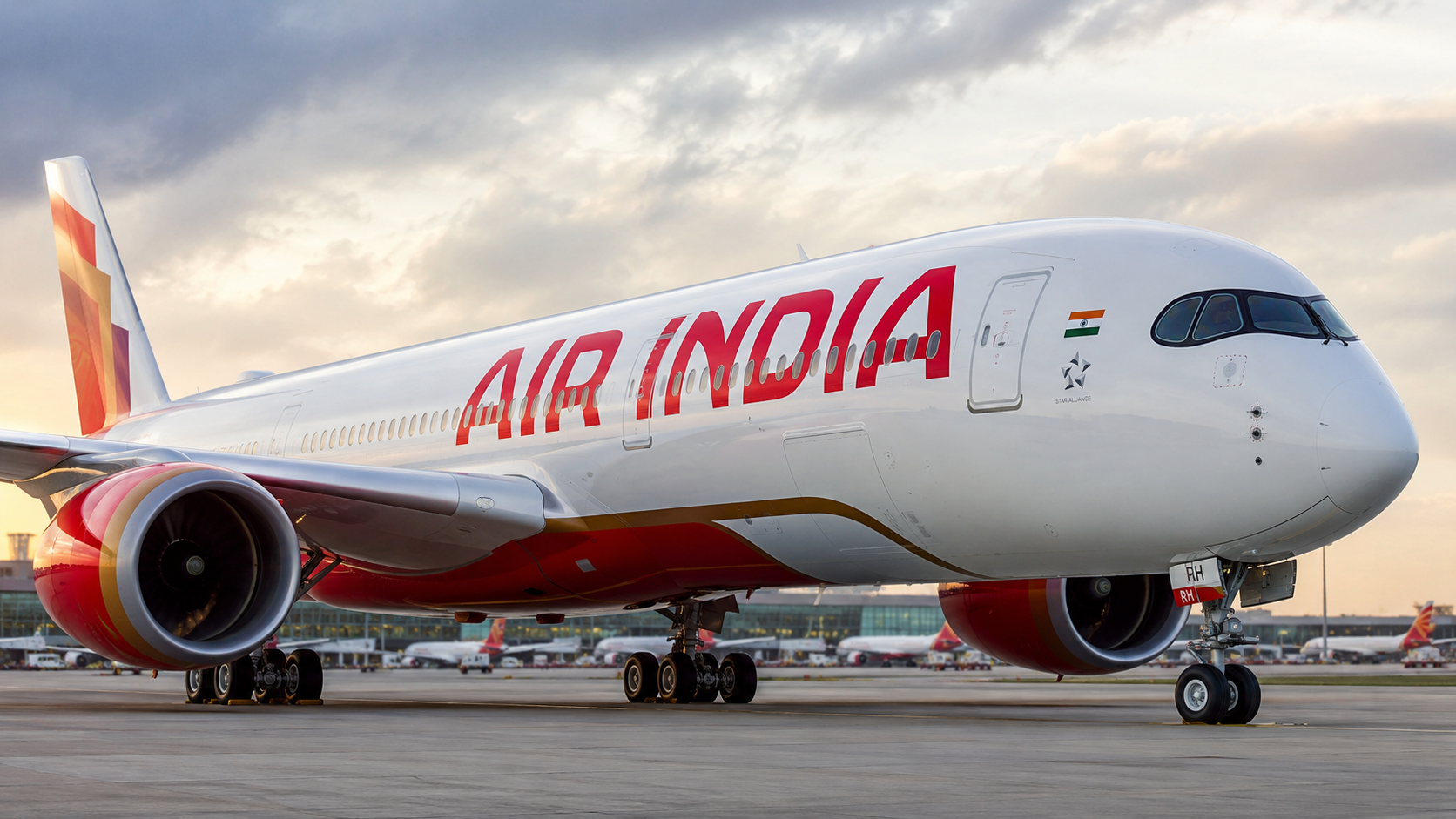
Air India’s transformation is entering a difficult new chapter.
The airline is reportedly seeking about $1.5 billion in fresh equity from Tata Sons and Singapore Airlines, according to people familiar with the matter cited by Reuters. The request comes only months after Air India and Air India Express reported a combined loss of $2.33 billion for the financial year ended March 2026.
The proposed funding has not been finalised, and Air India and Tata Sons have not publicly confirmed the request. Singapore Airlines, which owns about 25% of Air India, said it was working with Tata Sons on the carrier’s transformation but declined to comment on its finances.
Still, the reported request is significant. Tata took control of the former state-owned airline in 2022 with an ambitious plan to rebuild it into a major international carrier. Four years later, that rebuilding effort is consuming more capital than expected.
And there is now a bigger issue hanging over the project: how much longer will Air India need shareholder funding before the turnaround begins to pay for itself?
Air India Wants Fresh Capital
Reuters reported that Air India is seeking the money in the form of fresh equity and wants access to the funds quickly. The investment would likely be made in tranches, with Singapore Airlines expected to contribute its share if the proposal goes ahead.
The discussions are still taking place, so the final amount and structure could change.
Even so, a $1.5 billion request would rank among Air India’s largest publicly reported shareholder funding requirements since Tata returned the airline to private ownership.
That is notable because the carrier has already received substantial investment since the takeover.
The money has been going into a long list of priorities: aircraft, cabin refurbishment, maintenance, technology, training, airport operations and the wider integration of Air India and Vistara.
Those projects were always going to be expensive. What has made the situation harder is that Air India has had to carry out much of the rebuilding while dealing with a series of external disruptions.
A Record Loss Has Changed the Picture
Air India and Air India Express recorded a combined $2.33 billion loss in the year ended March 2026, more than twice the previous year’s loss.
That result has put additional pressure on the turnaround.
It is important to separate the two companies from the headline figure. The $2.33 billion number relates to Air India and Air India Express together, rather than the mainline airline alone.
Nevertheless, the combined result shows the scale of the challenge facing the wider Air India group.
The airline is spending heavily at the same time it is trying to repair an operation that spent years under state ownership with comparatively limited investment. New aircraft are arriving, older aircraft are being refurbished and the carrier is attempting to build a much stronger long-haul network.
Those investments may eventually improve Air India’s financial performance. They also require substantial cash before the benefits become visible on the bottom line.
That is the difficult part of the strategy.
The Fleet Is Only One Part of the Rebuild
Air India’s aircraft orders have attracted much of the attention since Tata took over.
The airline has orders spanning Airbus and Boeing, including A350s, A320neo-family aircraft and Boeing 787s. Air India Express is also expanding its fleet, including with Boeing 737 MAX aircraft.
But buying aircraft is only one element of the transformation.
Air India has also been refurbishing older wide-body aircraft, including Boeing 777s and 787s. Cabins need to be brought up to a consistent standard, maintenance capabilities have to be strengthened and the airline’s ageing technology infrastructure needs replacing.
There is also the less visible work of changing internal processes and corporate culture.
That helps explain why Tata Sons has previously warned that the turnaround could take as long as a decade. Chairman N Chandrasekaran has pointed to supply-chain problems, legacy systems, fleet issues and cultural changes as factors that will take time to resolve.
In other words, Air India is not simply trying to become a larger airline. It is trying to rebuild the business underneath the airline at the same time.
Geopolitical Disruptions Have Added to the Pressure
The timing has not been particularly kind to Air India.
The carrier has faced disruption from Pakistan’s airspace restrictions on Indian airlines, while its international network has also been affected by wider geopolitical tensions, including the conflict involving the US, Israel and Iran.
Air India has also been dealing with the aftermath of last year’s fatal crash that killed 260 people.
For an airline with a large international operation, disruptions to airspace can have a direct financial impact. Flights may need to take longer routes, increasing fuel consumption and operating costs. Aircraft can also spend more time in the air without generating additional revenue.
Fuel prices have added another layer of uncertainty.
These problems do not explain Air India’s entire financial performance, but they have arrived while the airline is already carrying the cost of its transformation.
Singapore Airlines Faces Its Own Air India Problem
The latest funding request is also important for Singapore Airlines.
SIA owns around 25% of Air India and became a strategic partner through the merger of Air India and Vistara. The Indian market offers Singapore Airlines an opportunity to participate in one of the world’s fastest-growing aviation markets.
But that opportunity comes with financial exposure.
Singapore Airlines has already acknowledged the impact of Air India on its own results. Its investment has yet to deliver the kind of returns that would justify the scale of the long-term commitment, while Air India’s losses have become increasingly difficult to ignore.
If the proposed $1.5 billion equity injection proceeds, SIA would need to provide its proportionate contribution.
That means the decision is not simply a matter for Tata Sons. Singapore Airlines also has to decide how much additional capital it is prepared to commit to a turnaround that may take years to complete.
Air India Is Cutting Costs While Building for Growth
Perhaps the most difficult part of the current strategy is that Air India has two competing priorities.
It needs to invest more, but it also needs to lose less.
The airline needs new aircraft and better products if it wants to compete with major international carriers. At the same time, it cannot afford to allow the cost base to grow faster than revenue.
Reuters has reported that Air India has sought to defer deliveries of hundreds of aircraft on order from Airbus and Boeing as Tata pushes the airline to reduce costs.
That does not necessarily mean the long-term expansion strategy has been abandoned.
Instead, it suggests that Air India may be trying to slow the pace of investment while it gets a better handle on its finances.
For an airline with such a large order book, managing that timing will be crucial.
Taking aircraft too quickly can increase costs before the network is ready to support them. Delaying deliveries, meanwhile, can limit growth and potentially weaken the airline’s ability to compete for valuable international traffic.
Another Funding Round May Not Be the Last
The reported $1.5 billion request could give Air India additional breathing room, but it is unlikely to solve every problem facing the carrier.
One source cited by Reuters said Air India is expected to require further capital injections in the coming years.
That may not be surprising given the scale of the transformation. Rebuilding a major airline requires enormous amounts of capital, particularly when the starting point includes an ageing fleet, outdated systems and years of underinvestment.
The real test will be what Air India does with the money.
If the additional capital helps the airline improve reliability, aircraft utilisation, customer experience and network economics, it could strengthen the case for Tata’s long-term strategy.
If losses remain at exceptionally high levels despite the investment, however, shareholders will face increasingly difficult questions about the pace and structure of the turnaround.
Tata’s Long Game Faces a Crucial Test
Tata Sons has never suggested that Air India could be transformed overnight.
The company inherited an airline with deep operational and financial problems. Turning it around was always going to involve years of investment.
But the latest numbers make the challenge much clearer.
Air India now has new aircraft coming, a growing international ambition and a major programme to modernise the airline. It also has a $2.33 billion combined annual loss behind it and is reportedly asking its owners for another $1.5 billion.
That makes the next phase particularly important.
The question is no longer whether Tata is willing to invest in Air India. It clearly is.
The question is whether those investments can eventually produce a stronger airline that needs less shareholder support.
For now, the proposed funding remains under discussion. But if the $1.5 billion injection goes ahead, it will be another major bet on the belief that Air India’s transformation is worth the cost—and that the payoff is still somewhere ahead.
For more on Air India, see: Air India’s 100-Aircraft Expansion Faces a Profit Test


Leave a Reply