
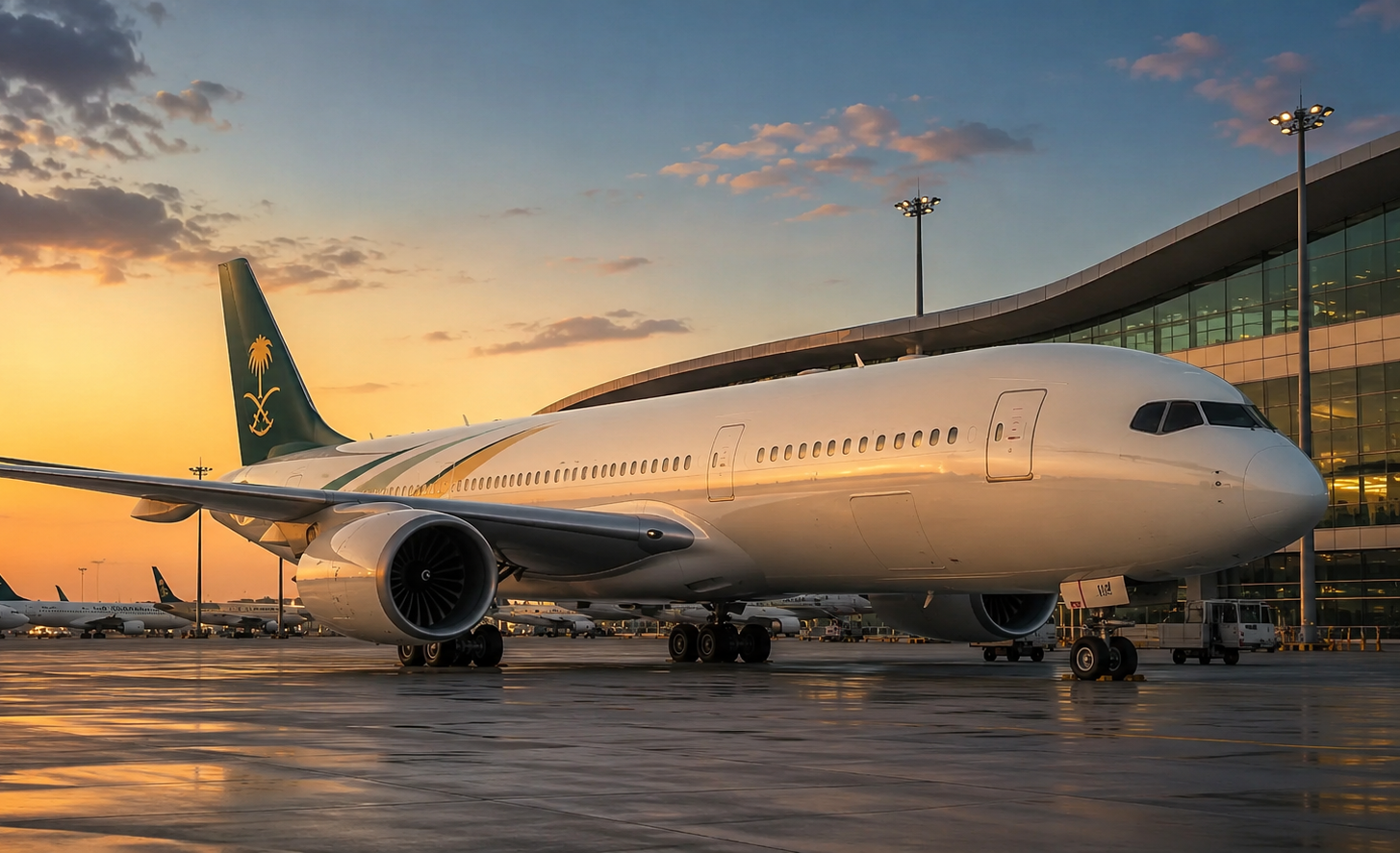
Saudia Group is putting another piece of its ambitious fleet expansion strategy in place after signing a memorandum of understanding (MoU) with Saudi Export-Import Bank (Saudi EXIM) and Crédit Agricole Corporate and Investment Bank (Crédit Agricole CIB) to explore financing solutions for new Airbus aircraft.
The agreement, signed in Paris on August 25 during the French-Saudi Investment Roundtable, comes at an important stage for the Saudi aviation group. Saudia is already preparing to receive aircraft from a substantial existing orderbook, while the airline is also understood to be evaluating another large aircraft purchase that could significantly reshape its fleet in the years ahead.
The new financing framework could therefore prove important not only for aircraft already on order, but potentially for future fleet commitments as Saudia expands its international network and seeks additional capacity.
Saudia Builds a New Airbus Financing Framework
Under the MoU, Crédit Agricole CIB will act as the financier and arranger. The French banking group will work with Saudia to structure financing solutions that correspond with the expected delivery schedules of the aircraft.
Saudi EXIM, meanwhile, will assess providing credit-risk insurance for the transactions. Any insurance support remains subject to the bank’s credit, insurance and procedural requirements, as well as agreement on the final terms of individual aircraft transactions.
The structure brings together two different elements of aircraft finance: international commercial banking and Saudi export credit support. For Saudia, that could provide greater flexibility in arranging funding for a fleet program that will require substantial capital over several years.
The MoU does not disclose the value of the proposed financing, nor does it identify specific aircraft that will be financed under the arrangement. It should also not automatically be interpreted as confirmation of a new Airbus order. Instead, the agreement establishes a potential financing channel that can be used as aircraft are delivered and as additional transactions are developed.
Large Airbus Backlog Already in Place
The timing of the agreement is significant because Saudia Group already has a sizable Airbus commitment.
In May 2024, the group ordered 105 A320neo-family aircraft, consisting of 12 A320neos and 93 A321neos. The order was divided between Saudia and its low-cost subsidiary flyadeal, with Saudia allocated 54 A321neos and flyadeal receiving 12 A320neos and 39 A321neos.
Deliveries from that order are scheduled to begin in 2026 and continue through 2032. The scale and duration of the program create a long-term requirement for aircraft financing, making a financing partnership potentially useful even without another immediate aircraft order.
Saudia is also managing major commitments with Boeing. The group has Boeing 787 aircraft scheduled for delivery, while Saudia Cargo announced in July that it had agreed to acquire four new Boeing 777-200 freighters, adding to the four 777 freighters already in its fleet.
That combination illustrates the scale of the fleet transformation underway across the group. The Airbus financing agreement is therefore one component of a much broader expansion program involving narrowbody, widebody and cargo aircraft.
Another Major Saudia Aircraft Order Could Follow
The financing agreement is particularly noteworthy because Saudia has reportedly been considering another major aircraft acquisition.
Industry reports earlier this year indicated that the Saudi flag carrier was in discussions with both Airbus and Boeing over a potential order for at least 150 aircraft. The discussions were reported to include narrowbody and widebody passenger aircraft as well as freighters, although no final manufacturer allocation had been announced.
That means the latest MoU could become more strategically important if Saudia moves forward with another large fleet purchase.
Still, it would be premature to assume that a new order is imminent. The financing arrangement can support aircraft that Saudia Group has already committed to acquire, with the proposed funding structured around delivery schedules. At the same time, the parties have indicated an interest in exploring additional financing transactions tied to future aircraft orders and fleet development programs.
In practical terms, the agreement gives Saudia another potential source of funding as its fleet requirements evolve.
Why Saudi EXIM’s Role Matters
Saudi EXIM’s involvement adds a different dimension to the deal.
As Saudi Arabia’s export credit agency, the institution is designed to help Saudi companies access international markets and strengthen the country’s non-oil exports. In this case, the focus is on air transport services.
As Saudia increases its aircraft capacity and expands international operations, the airline can carry more passengers between Saudi Arabia and overseas markets. That creates an export-like services component, with Saudi air transport being supplied to international customers.
Credit insurance can also make transactions more attractive to international lenders by helping address some of the credit risks associated with financing large aircraft purchases. The proposed structure could consequently widen the pool of financial institutions capable of participating in Saudia’s aircraft financing program.
Saudi EXIM has described the arrangement as part of a broader effort to use export credit insurance to support major international transactions and strengthen Saudi companies’ access to global markets. The bank has also highlighted the transaction as an important step for extending export credit insurance into the services sector.
Financing Supports Saudi Aviation Expansion
For Saudia, the immediate objective is straightforward: secure financing capacity that can keep pace with its fleet expansion and modernization plans.
A larger fleet will allow the group to increase seat capacity, open or strengthen international routes and improve connectivity between Saudi Arabia and destinations around the world. This is particularly relevant as Saudi Arabia continues to invest heavily in aviation, tourism and transport infrastructure under its broader economic diversification strategy.
The country’s aviation ambitions extend beyond the national carrier. Saudia and flyadeal are both expanding, while the wider aviation sector is being positioned to support growing tourism, business travel and international connectivity.
The French-Saudi setting of the agreement is also significant. The MoU was signed during a high-level investment roundtable focused on strengthening economic and investment ties between Saudi Arabia and France. The two countries have been expanding cooperation across sectors including transport, logistics and financial services, making aircraft financing a natural part of that wider relationship.
A Flexible Structure for Future Fleet Needs
The biggest takeaway from the agreement is not a new aircraft order, but the creation of a financing framework that could support Saudia’s continuing fleet ambitions.
With Airbus deliveries already stretching into the early 2030s, Saudia will need financing solutions that can accommodate multiple delivery stages and changing market conditions. A combination of international bank funding and export credit insurance gives the group another option for managing those requirements.
If Saudia eventually proceeds with another major aircraft purchase, the relationship with Crédit Agricole CIB and Saudi EXIM could provide a foundation for additional transactions. For now, however, the final financing and insurance arrangements remain subject to the completion of the necessary procedures and agreement on the terms of each aircraft transaction.
The development nevertheless underlines the scale of Saudia Group’s transformation. With a significant Airbus backlog, additional Boeing deliveries and the possibility of another major order, the airline is preparing for a period of sustained fleet growth. The latest financing agreement could help ensure that capital arrangements keep pace with that expansion, while also supporting Saudi Arabia’s broader goal of building a globally connected aviation and services economy.
For more on Saudia, see: Saudia Expands Cargo Fleet With Four Boeing 777 Freighters




Leave a Reply