

Southwest’s 787 Question Signals a Bigger Long-Haul Transformation
Southwest Airlines Is Looking Beyond the 737
For more than five decades, Southwest Airlines has built its identity around a simple formula: keep the fleet straightforward, keep fares competitive and connect a huge number of cities with Boeing 737 aircraft.
That formula made Southwest one of the most recognizable airlines in the United States.
But the airline is now moving into territory that could eventually force it to rethink one of the foundations of that model.
Southwest is considering long-haul international flying within the next five years, according to CEO Bob Jordan. He has made clear that the airline is not trying to copy the enormous global networks operated by Delta Air Lines, United Airlines or American Airlines. Instead, Southwest could target a relatively small number of strategically important international destinations that would satisfy a large share of customer demand.
That raises a much bigger question: what aircraft would Southwest use?
The Boeing 737 MAX can take Southwest farther than the airline’s older narrowbody fleet ever could. But there is a point at which range, passenger comfort, cargo capability and economics make a larger aircraft increasingly attractive.
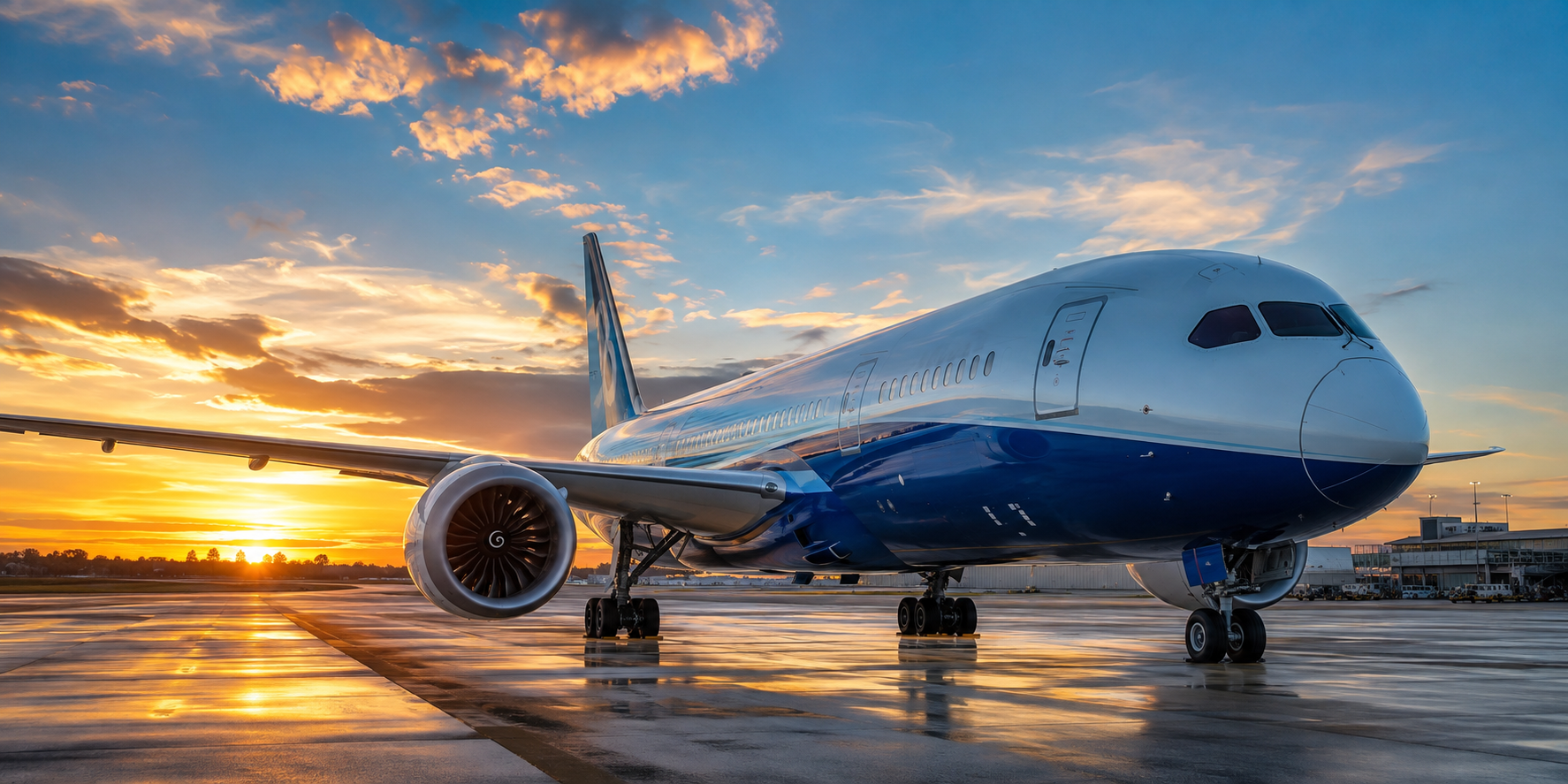
That is where the Boeing 787 Dreamliner enters the conversation.
There is no indication that Southwest has placed a 787 order, and the airline has not announced a decision to introduce a widebody. But if Southwest eventually wants to operate its own long-haul international flights, the 787 could become one of the most logical options available.
Southwest’s Transformation Is Already Underway
The potential long-haul move did not appear out of nowhere.
Southwest has spent the past two years making changes that would have been almost unthinkable under its traditional business model.
The airline moved away from open seating, introduced assigned seats and extra-legroom seating, expanded its fare structure and began looking at more premium offerings. It has also been developing airport lounge plans and seeking ways to attract customers who might previously have chosen a full-service competitor.
Those changes matter because long-haul international flying is a very different business from Southwest’s traditional short- and medium-haul operation.
Passengers spending several hours crossing an ocean have different expectations. Cabin comfort matters more. Premium seating becomes more valuable. Onboard service becomes more important. The ability to carry checked baggage and belly cargo becomes a larger part of the revenue equation.
Southwest is therefore not simply looking for somewhere else to fly its 737s.
It is gradually changing what the airline itself is capable of selling.
That makes the long-haul strategy one of the most consequential pieces of Southwest’s broader turnaround.
The Airline Has Already Built a Global Network Without Flying Long-Haul
Interestingly, Southwest has already begun building the commercial infrastructure for international expansion.
In 2025, the airline announced partnerships with several international carriers, including Icelandair, China Airlines, EVA Air, Philippine Airlines, Condor and Turkish Airlines. Those relationships allow Southwest customers to connect beyond the airline’s own network and reach destinations that Southwest does not currently serve.
The partnership with China Airlines was particularly significant because it represented Southwest’s first trans-Pacific airline partnership. Southwest said the arrangement could give its customers access to connections across Asia while allowing China Airlines to tap into Southwest’s extensive domestic network.
That strategy gives Southwest a way to test international demand without immediately taking on the enormous cost of operating its own long-haul fleet.
But there is a limitation.
A passenger traveling from a Southwest city to Asia may still have to change airlines.
For Southwest, that creates an obvious commercial opportunity. If enough customers are already using partner airlines to reach international destinations, operating some of those long-haul routes itself could eventually capture more of the journey.
That appears to be the direction Jordan is pointing toward.
Why the Boeing 787 Makes Sense
If Southwest eventually decides to introduce a widebody aircraft, the Boeing 787 would have one major advantage over many alternatives: it would preserve the airline’s long relationship with Boeing.
Southwest has operated an all-Boeing fleet since its beginning, and as of June 30, 2026, all 803 aircraft in its fleet were Boeing 737 variants.
Introducing the 787 would still be a major operational change, but it would not mean moving to a new aircraft manufacturer.
The Dreamliner is designed specifically for long-haul markets. Its combination of range, fuel efficiency and relatively modest widebody capacity makes it suitable for routes where an airline may not have enough demand to justify a much larger aircraft.
That characteristic could fit Southwest’s proposed strategy unusually well.
Jordan has indicated that Southwest does not need a network containing dozens upon dozens of far-international destinations. Instead, the carrier could focus on roughly eight to 12 long-haul destinations that are particularly relevant to its customers.
That is precisely the kind of strategy where a 787 could become useful.
Southwest would not need hundreds of widebody aircraft.
It could potentially operate a relatively small fleet on carefully selected routes.
The 787 Could Give Southwest Something the 737 Cannot
The 737 MAX has dramatically expanded the geographic possibilities available to Southwest.
However, range is only one part of the equation.
A long-haul flight is not simply a longer version of a domestic flight. Southwest would have to consider passenger demand, payload, cargo, airport infrastructure, crew requirements, turnaround times and the economics of operating a narrowbody over many hours.
The 787 offers substantially more cabin space and long-haul capability.
That could allow Southwest to consider markets that would be difficult or commercially unattractive with a 737.
It could also give the airline greater flexibility in matching aircraft size with demand.
That point is important.
A giant widebody is not automatically the answer. Southwest’s proposed strategy is actually the opposite of building a massive global network. The airline wants a limited number of international markets where it can be highly relevant.
A 787-8 or 787-9 could potentially provide enough capacity for those markets without requiring Southwest to fill an aircraft as large as some of the biggest twin-aisle jets operated by legacy carriers.
In other words, the 787 would not necessarily turn Southwest into another United or Delta.
It could allow Southwest to remain Southwest while extending the model across the oceans.
But There Is a Huge Problem: Southwest’s Simplicity
There is a reason Southwest has spent decades avoiding a widebody fleet.
Its single-family fleet is one of its biggest competitive advantages.
Pilots, mechanics, flight attendants and other employees can operate across a highly standardized aircraft family. Training is simpler. Spare parts can be consolidated. Maintenance planning benefits from commonality. Aircraft can be moved around the network without the constraints associated with multiple fleet types.
A 787 would disrupt that simplicity.
Southwest would suddenly have to manage a second Boeing aircraft family with completely different maintenance requirements, training programs, airport needs and operating economics.
That would be a major strategic decision.
And Southwest’s leadership knows it.
In June 2026, Chief Operating Officer Andrew Watterson reiterated that the airline prefers to avoid fleet diversification because adding another aircraft type introduces operational complexity. The comments came as Southwest continued dealing with delays to the 737 MAX 7 program.
That makes the 787 question considerably more complicated than simply asking whether the aircraft can fly the routes.
The real question is whether the additional revenue from long-haul international flying would be large enough to justify giving up some of Southwest’s fleet simplicity.
Southwest Still Has a Massive 737 Commitment
There is another reason the 787 is unlikely to arrive quickly.
Southwest is nowhere near finished with its 737 modernization program.
At the end of June 2026, the airline had 803 aircraft. Its fleet consisted of 288 737-700s, 192 737-800s and 323 737-8s.
The airline also has hundreds of additional MAX aircraft on order.
As of July 23, Southwest had firm orders for 479 MAX aircraft for delivery between 2026 and 2031, after accounting for 25 aircraft already received during 2026, plus 138 MAX options. The airline has also been adjusting the mix of MAX 7 and MAX 8 aircraft in response to Boeing’s delivery delays.
The MAX 7 remains particularly important.
Southwest is expected to be its launch customer, but certification and delivery delays have repeatedly forced the airline to revise its fleet and capacity plans. The carrier continues to work with Boeing and expects the aircraft to enter service after certification and an internal integration process.
That means Southwest has plenty of narrowbody fleet decisions to make before it needs to commit billions of dollars to an entirely new aircraft type.
Oakland Shows the Other Side of Southwest’s Strategy
There is another development that makes the Southwest story more interesting.
While the airline is talking about eventually expanding internationally, it is also becoming much more selective about where it deploys existing capacity.
Oakland is a good example.
Southwest remains the dominant airline at Oakland San Francisco Bay Airport, but the carrier has reduced capacity there as it reshapes its network. Recent airport data and reporting have shown significant declines in traffic, while Southwest has shifted some capacity toward San Francisco International Airport and other markets. Oakland’s overall passenger traffic has also remained below earlier levels.
The relationship between Southwest and Oakland became especially complicated after the city filed a lawsuit in 2024 alleging violations involving paid sick leave and other employment-related requirements. The city argued that Southwest had violated Oakland and California labor laws and breached a previous settlement.
The lawsuit was later dropped, but the broader issue remains relevant because Oakland illustrates how Southwest is managing its network.
The airline is no longer simply adding flights because an airport has historically been important.
It is evaluating where aircraft can generate stronger returns.
That is critical to understanding the potential 787 strategy.
If Southwest eventually gets widebodies, those aircraft are unlikely to be spread evenly across its network. They would probably be concentrated on routes where demand, fares and connectivity justify the investment.
A 787 Would Probably Be a Carefully Targeted Experiment
If Southwest does eventually select the Dreamliner, the first routes will matter enormously.
The airline has not disclosed specific long-haul destinations, so naming particular cities as planned routes would be premature.
But the strategy is becoming easier to understand.
Southwest already has large domestic customer bases that could feed international flights. Its partnerships have also given it experience connecting customers to Asia and Europe. Its network includes major gateways such as Baltimore-Washington, Denver, Nashville, Orlando, Los Angeles, San Francisco, Seattle, Honolulu and other cities used for international connectivity through its partner network.
That gives Southwest multiple possible launch points.
The airline could therefore approach long-haul flying as a series of focused experiments rather than a wholesale transformation.
That would be consistent with Jordan’s comments.
Southwest does not need to build the next global megahub.
It needs to identify a small number of routes where its brand, domestic network and customer base give it an advantage.
The Bigger Story Is Not the 787
The most important part of the Southwest story may ultimately have little to do with the Boeing 787 itself.
The real story is that Southwest is moving away from a business model that worked brilliantly for decades but is becoming harder to sustain in a changing airline market.
The company has already introduced assigned seating, expanded fare choices, added extra-legroom products, developed international partnerships and discussed lounges and more premium offerings. Its leadership is now openly considering long-haul international flying within the next five years.
At the same time, Southwest is becoming more disciplined about where it places capacity.
That combination is significant.
Southwest is not simply trying to become bigger.
It is trying to become more valuable.
The Boeing 787 could eventually become an important piece of that strategy, but only if the economics justify breaking with the airline’s decades-old single-family fleet philosophy.
Could Southwest Really Fly the 787?
For now, the answer is: possibly, but not soon.
Southwest has not announced a Boeing 787 order, and there is no evidence that a purchase is imminent.
The airline is still heavily invested in the 737 MAX and has enough aircraft on order to keep its narrowbody fleet modernization program moving for years. Boeing’s delays have complicated that process, but Southwest continues to favor fleet commonality.
Yet the strategic case for a future widebody is becoming stronger.
Southwest’s own CEO has publicly said long-haul international flying is likely within five years. The airline is building partnerships that expose its customers to international destinations. Its commercial model is becoming more premium. And its domestic network provides a huge potential customer base for a carefully selected group of overseas routes.
That makes the Boeing 787 more than an interesting aircraft rumor.
It is a symbol of the decision Southwest may eventually have to make.
Does the airline remain a giant 737 operator focused primarily on North America, or does it use its enormous domestic network as the foundation for a new international business?
If the second option wins, Southwest may eventually need an aircraft capable of taking its brand much farther than the 737 can comfortably go.
And that is where the Boeing 787 could enter the picture.
For now, however, the Dreamliner remains a possibility rather than a commitment.
The more immediate takeaway is that Southwest is already preparing for a very different future. Its next transformation may not be about adding another domestic destination at all.
It could be about giving passengers a reason to stay with Southwest when their journey crosses an ocean.
For more on Boeing 787, see: United Boeing 787-9 Dreamliner Faces Fresh Technical Setback

Leave a Reply