

A Failure at V1
On 8 November 2024, the aircraft—registered VH-VYH—was departing Sydney for Brisbane when the situation escalated abruptly. As the jet accelerated down runway 34R and reached V1, the speed beyond which a take-off must continue, the crew heard a sudden “bang.” Almost immediately, the right-hand engine lost power.
At that point, rejecting the take-off was no longer a viable option. The pilots continued the departure, stabilised the aircraft, and began working through emergency procedures. It’s the kind of scenario crews train for repeatedly, but rarely encounter in real-world operations.
The failed engine was a CFM International CFM56-7B, a workhorse powerplant used extensively across the global 737 fleet. While highly reliable overall, the event shows how even well-understood systems can still produce unexpected failures.
Decision-Making Under Pressure
Once airborne, the crew declared an emergency and coordinated closely with air traffic control. The aircraft climbed safely on a single engine, which is exactly what modern twinjets are designed to do in such situations.
Initially, the pilots requested a return to runway 30R. That option quickly disappeared—debris from the failed engine had scattered across the surface, forcing its closure. Instead, the aircraft was redirected to runway 34L.
From there, the approach and landing were handled without further complication. Onboard were 175 passengers and six crew members. None were injured.
The ATSB’s findings emphasise how well the situation was managed—not just in the cockpit, but across the broader response. Cabin crew, controllers, and airport emergency services all played their roles without hesitation, creating a coordinated chain that kept the risk contained.
What Went Wrong Inside the Engine
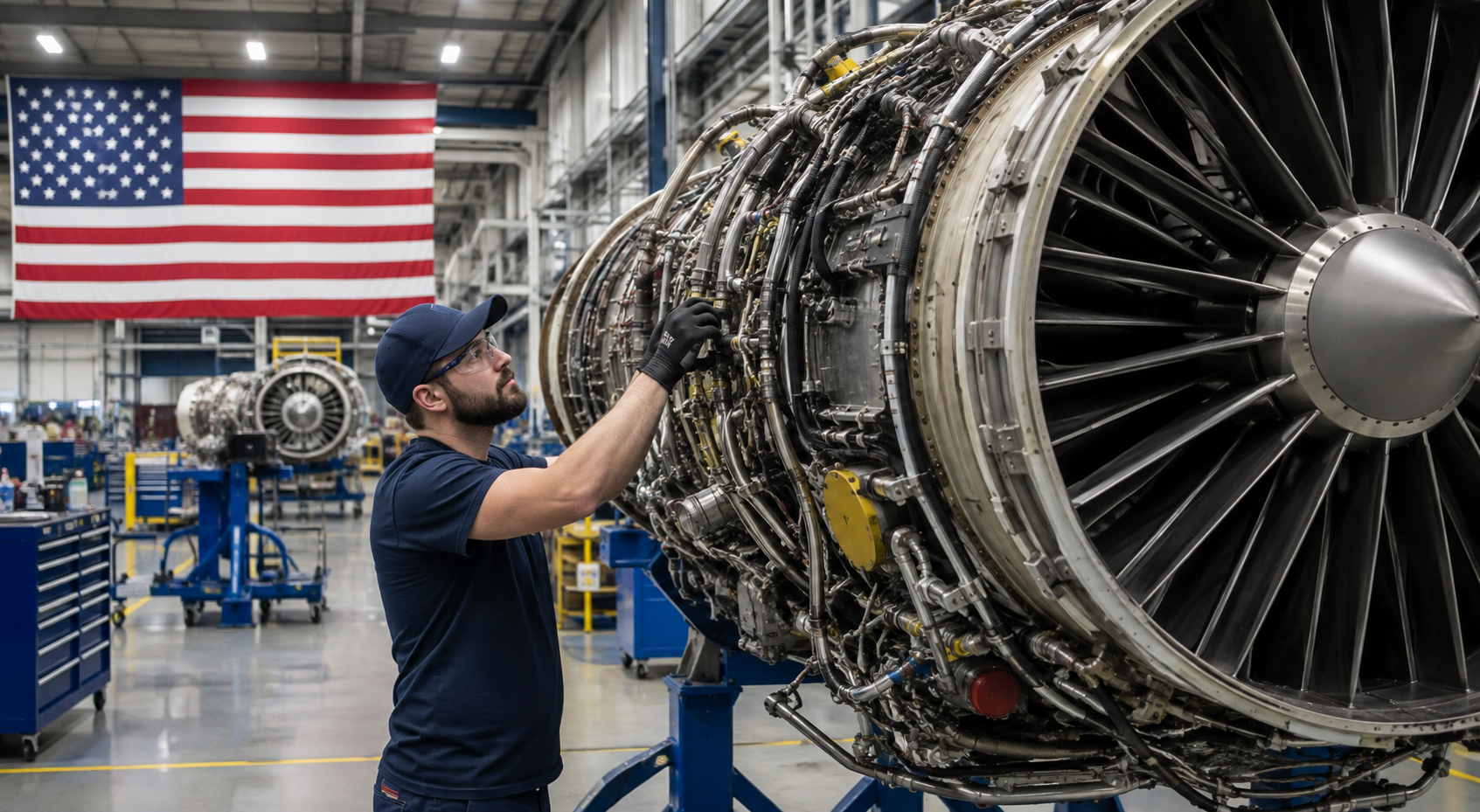
The investigation traced the failure back to a fatigue crack in one of the engine’s high-pressure turbine blades. Specifically, the issue developed in the dovetail section—the part that locks the blade into the turbine disc.
The crack originated in what engineers call the “min-neck” region, essentially the weakest point in the component’s cross-section. Over time, it spread through most of the blade before it finally gave way. When it did, the separation triggered further internal damage, including the loss of a neighbouring blade.
One of the more troubling aspects of the finding is how difficult the defect was to detect. The crack formed in a location that standard borescope inspections could not easily reveal. Spotting it would likely have required a full disassembly of the engine—something that isn’t routinely done without prior warning signs.
A Known Weakness, Narrowly Avoided
The ATSB also pointed out that this type of failure isn’t entirely new. The blade design involved has been associated with similar issues in the wider CFM56-7B fleet, prompting earlier action from the manufacturer.
A service bulletin had already reduced the recommended removal threshold for affected components—from 20,000 cycles to 17,900. The goal was simple: take engines off-wing sooner to reduce exposure to fatigue-related risks.
In this case, timing was tight. The engine on VH-VYH was scheduled for removal just 13 days after the incident. In other words, it was already nearing the end of its operational window under the updated guidance.
What This Means for the Industry
Events like this tend to sharpen focus across multiple areas of aviation. Maintenance planning is one of them. When component-level risks become better understood, operators often move toward more conservative replacement strategies—even if that increases short-term costs.
Inspection capability is another. While borescopes are indispensable, their limitations are well recognised. Situations like this can accelerate interest in more advanced diagnostic techniques or revised inspection intervals.
At the same time, the incident reinforces something more fundamental: the system works. Aircraft are designed with redundancy, procedures are drilled into crews, and emergency responses are structured to handle worst-case scenarios.
A Routine Flight That Wasn’t
From a passenger’s perspective, this was meant to be a routine domestic flight. What unfolded instead was a textbook example of how quickly conditions can change—and how controlled the outcome can still be.
There’s a tendency to focus on the failure itself. But the more telling story here is the absence of escalation. No injuries, no loss of control, no secondary complications. That doesn’t happen by chance.
It’s the result of layered safeguards—engineering, regulation, and human performance all aligning when they’re needed most.
For more on Qantas, see: Qantas Cuts FY26 Outlook as Fuel Costs Soar





Leave a Reply