
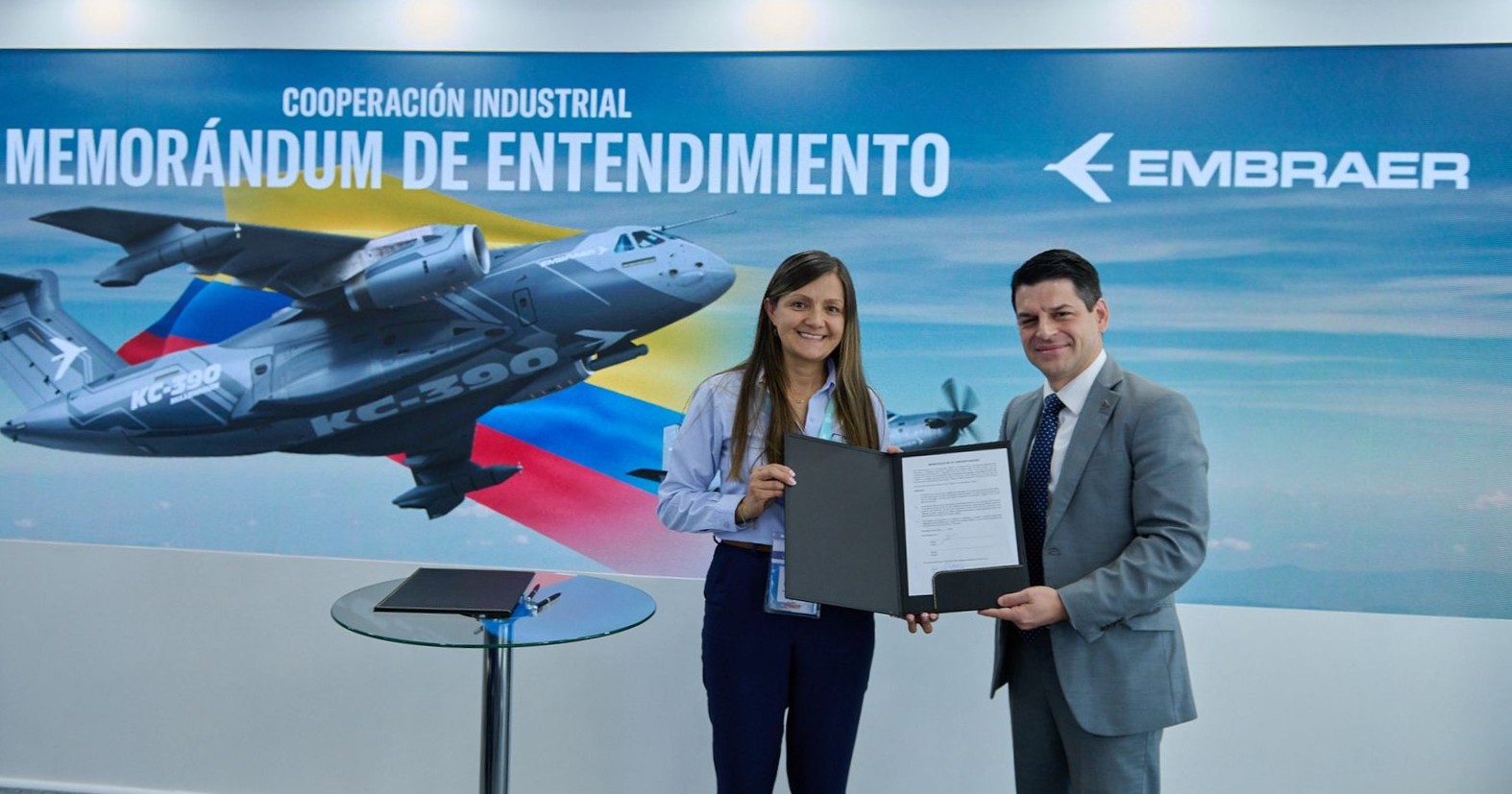
A Strategic Step Taken at FIDAE
At this year’s FIDAE airshow, Embraer formalized a fresh memorandum of understanding with the Colombian Aeronautical Industry Corporation, reinforcing a partnership that has been quietly evolving for years. While MoUs are often seen as preliminary, this one carries clear industrial intent: both sides are exploring ways to deepen technical collaboration and embed Colombia more firmly into the global aerospace supply chain.
The agreement is less about immediate contracts and more about positioning. Embraer has been steadily expanding its international industrial footprint, and Colombia offers a compelling mix of operational experience, geographic advantage, and a growing technical workforce. For CIAC, the deal opens doors that go beyond maintenance support, pushing into higher-value activities such as manufacturing participation and engineering collaboration.
There is also a broader regional context. Latin America’s aerospace sector is gaining incremental momentum, driven by defense upgrades and the need for localized maintenance infrastructure. In that sense, this agreement reflects a wider shift: global OEMs are no longer just exporting aircraft—they are building ecosystems.
Focus on Defense Platforms and Industrial Integration
A key element of the MoU is the potential expansion of cooperation around Embraer’s defense platforms, particularly the A-29 Super Tucano and the KC-390 Millennium. These aircraft sit at the core of Embraer’s defense portfolio and have seen steady demand in both established and emerging markets.
Colombia already operates a sizeable fleet of A-29s, giving CIAC hands-on familiarity with the platform. That operational experience is valuable. It creates a natural pathway toward deeper involvement—whether in component manufacturing, structural work, or long-term fleet support.
The KC-390 presents a different kind of opportunity. As a newer platform gaining traction internationally, it offers room for industrial partners to participate earlier in the lifecycle. If CIAC is integrated into production or support chains, Colombia could become a regional anchor point for sustainment activities tied to future operators.
Embraer has made it clear that one of its goals is to evaluate how CIAC can be incorporated into its global production network. That is not a trivial step. Aerospace supply chains are tightly controlled, certification-heavy environments. Entry requires not just capability, but consistency, compliance, and scale.
Building Technical Depth Through Knowledge Transfer
For Colombia, the significance of this agreement lies in capability development as much as industrial output. Colonel Oscar Francisco Zúñiga Martin, who leads CIAC, framed the MoU as a mechanism to accelerate knowledge transfer and elevate technical standards across the organization.
That matters in practical terms. Aerospace manufacturing and MRO are not easily developed sectors; they depend on precision processes, rigorous quality systems, and highly trained personnel. By working closely with Embraer, CIAC gains exposure to these frameworks in a structured way.
Over time, this kind of collaboration tends to compound. Engineers gain experience with advanced systems, technicians become familiar with international certification requirements, and local suppliers begin to align with global standards. The end result is not just improved capability within a single company, but a gradual strengthening of the broader aerospace ecosystem.
Maintenance, repair, and overhaul is likely to be an early area of expansion. Demand for MRO services is rising globally, particularly as fleets age and utilization rates climb. If Colombia can scale its capabilities in this space, it could capture a share of regional demand—reducing reliance on overseas facilities and shortening turnaround times for operators.
A Market with Established Foundations
This is not a new relationship being built from scratch. Colombia is already an established market for Embraer, with around 50 aircraft in operation across defense, commercial, and executive segments. That installed base provides both credibility and a practical foundation for further cooperation.
The Colombian Aerospace Force’s fleet of 24 A-29 Super Tucanos is particularly significant. It reflects years of operational alignment and creates ongoing demand for support, upgrades, and training. Beyond defense, Embraer’s presence in commercial and business aviation adds another layer of engagement, broadening the scope of potential collaboration.
From an economic perspective, integrating CIAC into Embraer’s supply chain could have measurable downstream effects. Increased local production and technical activity would contribute to higher-value industrial output, while also supporting job creation in specialized fields.
There is also an export angle. If Colombian facilities begin producing components or providing certified services for international programs, that activity feeds directly into global aerospace trade flows—an area where emerging markets are increasingly looking to gain ground.
Positioning Colombia as a Regional Aerospace Hub
The longer-term ambition behind the MoU is clear: positioning Colombia as a relevant aerospace hub within Latin America. That does not happen overnight, but partnerships like this are a necessary starting point.
For Embraer, the logic is straightforward. Expanding its industrial base into strategically located markets improves resilience and flexibility. For Colombia, the opportunity is more transformative. It is about moving up the value chain—from operator and service provider to integrated participant in global aerospace programs.
There are still variables to work through. MoUs outline intent, not guaranteed outcomes. Any meaningful integration will depend on investment, regulatory alignment, and CIAC’s ability to meet the stringent requirements of aerospace production.
But the direction is clear. Both sides are aligning around a shared objective: deeper industrial cooperation that benefits not just the companies involved, but the wider aerospace landscape in the region.
In that sense, the Embraer–CIAC agreement is less a headline moment and more a marker of gradual change—one that reflects how global aerospace is evolving toward more distributed, collaborative models of production and expertise.
For more on Embraer, see: Embraer Q1 2026 Deliveries Jump 47% Year-on-Year









Leave a Reply