
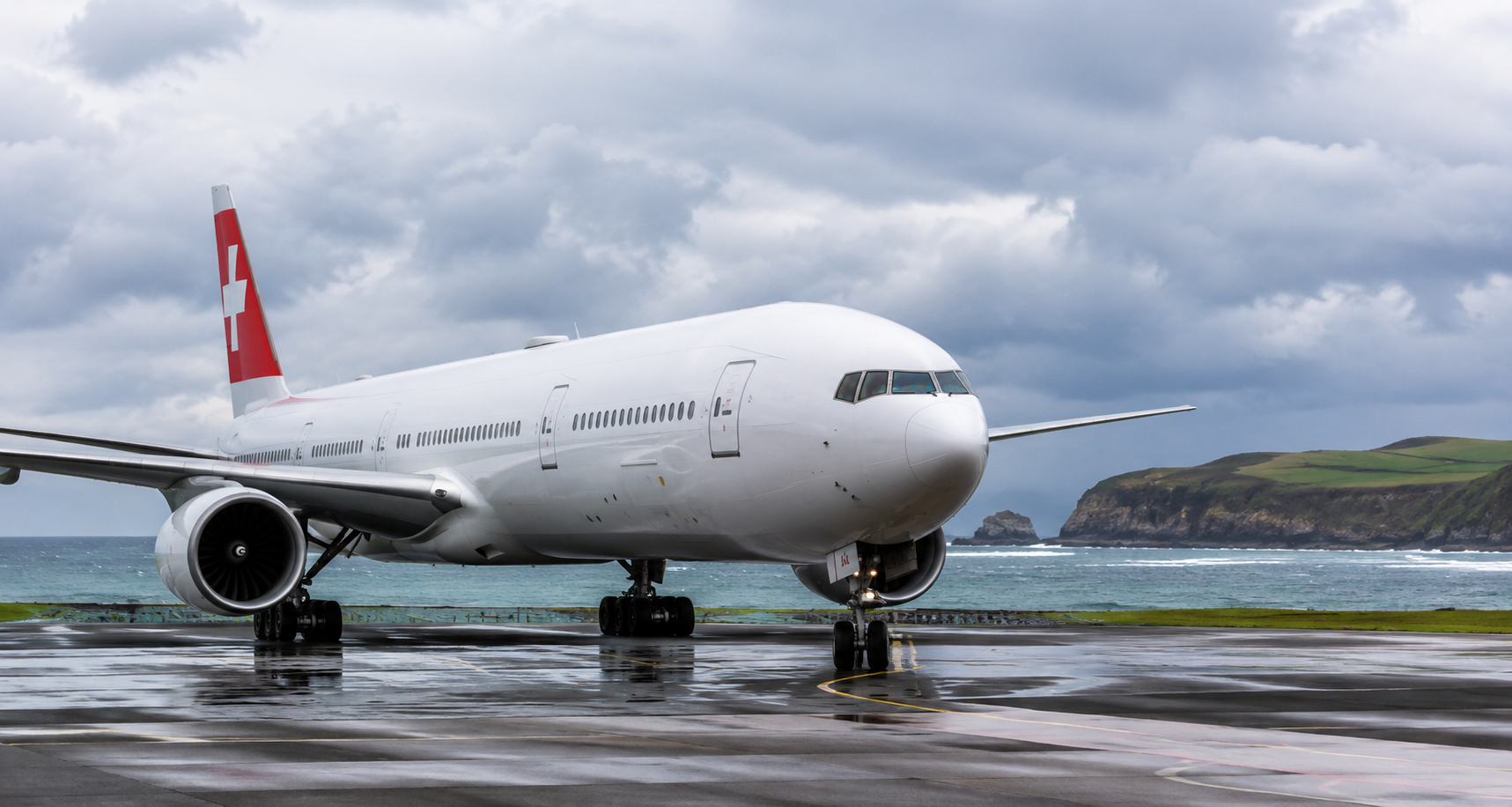
A routine transatlantic journey from Chicago to Zurich took an unexpected turn on Tuesday after a SWISS Boeing 777 was diverted to the Azores following reports of a strong chemical odor inside the cabin.
Flight LX9 was crossing the Atlantic when the cockpit crew decided to change course and head for Lajes Airport on Terceira, one of the islands in Portugal’s Azores archipelago. The decision came after an unidentified pungent smell was detected in the Economy Class section of the aircraft.
The Boeing 777 was carrying 222 passengers and 16 crew members. Rather than continuing across the Atlantic while the source of the odor remained unclear, the crew declared an in-flight emergency and diverted to the nearest suitable airport.
The aircraft landed safely at Lajes at around 6:30 a.m. local time, and everyone on board was able to leave the aircraft normally.
Chemical Odor Forces SWISS Flight LX9 to Divert
The incident began while SWISS flight LX9 was approximately midway across the Atlantic.
According to SWISS, the cockpit crew detected a sharp odor in the Economy Class cabin. The source could not immediately be identified, leaving the crew with little reason to continue the flight without first establishing what was causing it.
In aviation, an unfamiliar smell in the cabin can be difficult to assess in the early stages. It may be linked to something relatively minor, but an unexplained odor can also indicate a technical issue, fumes or another condition that requires investigation. With an aircraft far from major airports, crews have to consider the risks of continuing versus diverting while a suitable airport is available.
SWISS said its crews do not take risks in such circumstances and will make a precautionary landing when necessary. Air traffic control was also informed and an emergency was declared so the aircraft could receive the appropriate priority in the airspace.
That decision ultimately sent the Chicago-Zurich flight toward Terceira instead of continuing to Switzerland.
222 Passengers and 16 Crew Members Land Safely
The Boeing 777 involved in the incident was registered HB-JNF. It carried 222 passengers along with 16 crew members, including two pilots and 14 cabin crew members.
Despite the emergency declaration, the landing itself was completed without further incident. After touching down at Lajes Airport, the aircraft was able to leave the runway under its own power.
All passengers and crew members subsequently exited the aircraft normally.
The outcome is significant because the emergency call over the Atlantic could have generated considerable concern among people tracking the flight. A diversion and emergency declaration do not necessarily mean an aircraft is in imminent danger, but they indicate that the crew has identified a situation requiring additional caution and access to an airport.
In this case, the aircraft reached the Azores safely and passengers were able to disembark.
Several Passengers Report Temporary Symptoms
The incident was not limited to an unusual smell.
SWISS said approximately five passengers and one crew member underwent precautionary medical examinations after experiencing temporary symptoms. These included irritated eyes, nausea and headaches.
None of those affected required additional medical treatment, according to the airline. The passengers were also able to leave the aircraft normally.
The symptoms make the investigation into the odor particularly important. However, SWISS has not yet established what caused the smell and has specifically avoided speculating about its origin before the aircraft inspection is completed.
That distinction matters. At this stage, there is no confirmed explanation for the odor, and it would be premature to attribute it to a particular aircraft system, substance or onboard item.
The airline said its experts will conduct a detailed examination of the Boeing 777 before any conclusions are drawn.
Why the Azores Became the Diversion Point
For a flight traveling between North America and Europe, the Azores can serve as an important mid-Atlantic diversion option.
The islands are strategically positioned between North America and Europe, making airports such as Lajes particularly relevant when aircraft encounter problems while crossing the Atlantic.
For LX9, the location of Terceira provided the crew with a practical option after the chemical odor was detected. Instead of continuing toward Zurich while the issue remained unresolved, the pilots could land, allow passengers to leave the aircraft and have the situation assessed on the ground.
The aircraft landed at Lajes at 06:30 local time, according to SWISS.
SWISS Sends Replacement Aircraft for Stranded Passengers
The diversion meant that the passengers’ journey to Switzerland did not end in Terceira.
SWISS arranged a replacement aircraft to travel to the Azores and bring the affected passengers and crew back to Switzerland. The airline said the replacement flight was scheduled to depart Zurich in the afternoon, with arrival in Zurich expected later Tuesday evening.
SWISS’s official update put the expected arrival time at approximately 10:15 p.m. local Swiss time.
The disruption also had consequences for SWISS’s wider schedule.
Because the replacement aircraft was needed for the recovery operation, the airline said flight LX8 from Zurich to Chicago, along with the subsequent return flight from Chicago to Zurich using the same aircraft, had to be canceled. SWISS said it was arranging alternative travel for affected passengers.
What Caused the Chemical Smell?
That remains the biggest unanswered question surrounding the incident.
SWISS has confirmed that the odor was pungent and initially unidentified, but the airline has not said what produced it.
The aircraft will now be inspected by specialists. Until that investigation is complete, the airline has said it will not speculate about possible causes.
That leaves several possibilities open, but none should be treated as confirmed. The most important fact at this stage is that the crew detected something unusual, could not immediately establish its source and chose to divert as a precaution.
For passengers, the response may have been unsettling. For aviation professionals, however, the decision highlights the importance of treating unexplained cabin conditions seriously, particularly during long flights over remote areas.
Another Recent SWISS Diversion Raises Passenger-Safety Interest
The incident also comes shortly after another SWISS flight attracted attention for an onboard problem.
Earlier in August, a SWISS flight from Zurich to Boston was forced to make an unscheduled stop in Dublin after smoke was reported in connection with a power bank. That aircraft was also diverted as a precaution.
The two incidents involved different reported circumstances, and there is currently no indication that they are connected. Still, the timing is likely to increase interest in how airlines handle unusual smells, smoke and potential sources of fumes inside aircraft cabins.
For SWISS, the immediate priority is now determining what happened aboard LX9 and ensuring that the Boeing 777 is thoroughly inspected before it returns to service.
Investigation Will Determine the Next Steps
The most important part of the SWISS LX9 incident may come after the aircraft is already safely on the ground.
Investigators and airline specialists will need to determine where the odor originated, whether it was associated with an aircraft system or something inside the cabin, and whether any corrective action is required before the aircraft operates another passenger flight.
For now, SWISS has emphasized that the safety and well-being of passengers and crew remain its top priority.
The successful landing at Terceira also demonstrates why airline crews are trained to respond conservatively when faced with uncertain conditions. With an unexplained chemical odor and reports of temporary symptoms among several people, continuing a transatlantic flight without identifying the source would have introduced an unnecessary element of risk.
Instead, the crew diverted to the Azores, landed safely and allowed passengers and crew to leave the aircraft.
The immediate emergency is therefore over. The bigger aviation question is still waiting to be answered: what caused the chemical odor aboard SWISS flight LX9?
Until the aircraft inspection is completed, that remains unknown.
For more on similar developments, see: SWISS A330 Diverts to Bangor After Midair Smoke Scare


Leave a Reply