
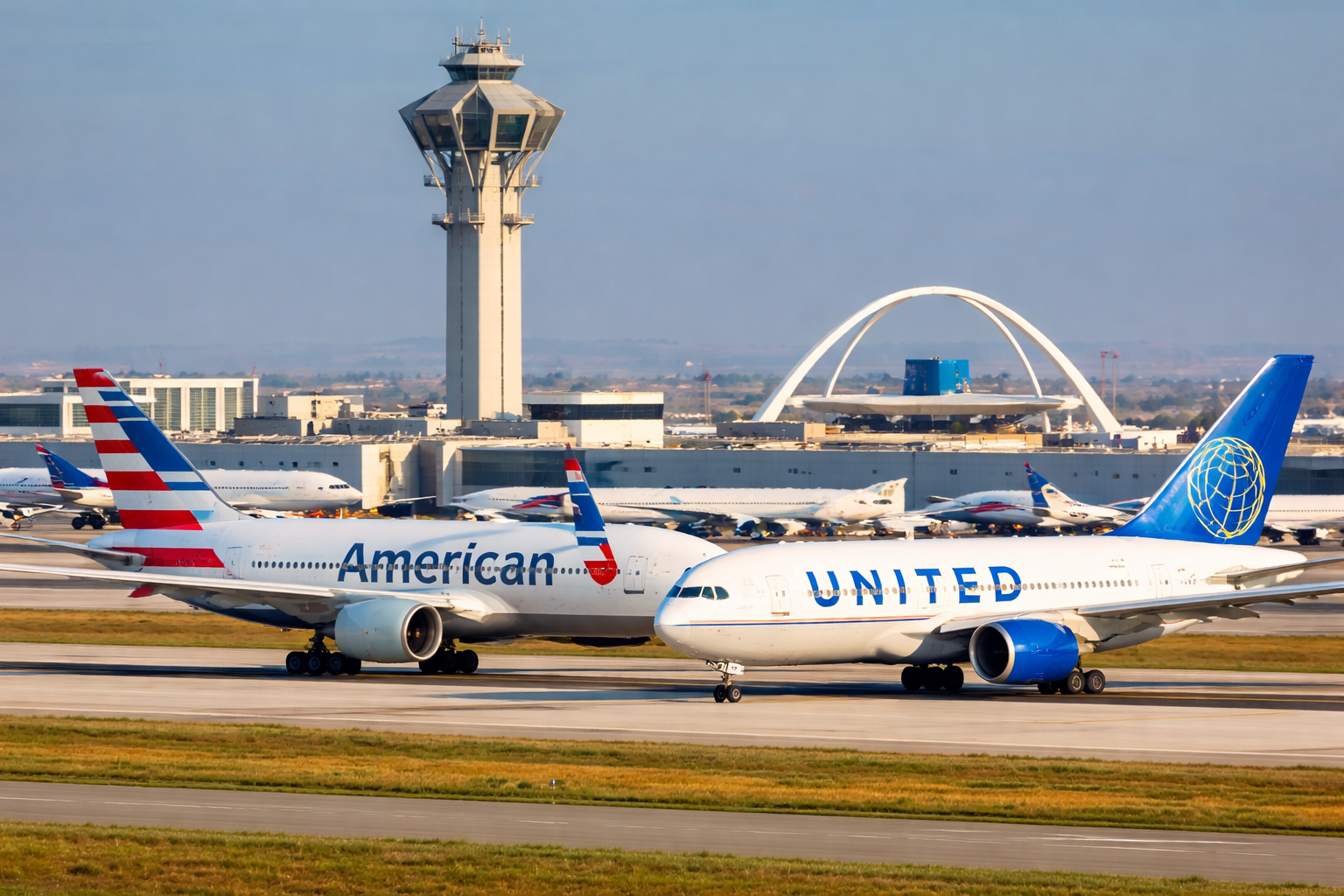
Speculation about a potential tie-up between American Airlines and United Airlines has been firmly put to rest, at least for now. American has issued a direct and unusually blunt response, making it clear that it has no interest in pursuing any form of merger with its long-time rival.
The statement follows a wave of industry chatter suggesting that United had been exploring the idea of a combination that would create the largest airline the world has ever seen. But American’s position leaves little ambiguity: such a deal is not only off the table—it is fundamentally at odds with how the airline views competition and market dynamics.
Drawing a Hard Line on Consolidation
American’s response was not a routine denial. The airline explicitly stated that it is “not engaged with or interested in any discussions” regarding a merger with United, effectively shutting down any suggestion that talks might be happening behind closed doors.
The timing of the statement is significant. Reports had emerged that United’s chief executive, Scott Kirby, had been considering the strategic merits of a merger for several months. The idea, according to those familiar with the matter, was even raised at a political level with Donald Trump as part of a broader argument around strengthening U.S. aviation competitiveness globally.
From a purely numerical standpoint, the concept is easy to understand. American and United are already two of the largest carriers in the world. Combined, they would transport close to 400 million passengers annually based on recent traffic figures, while operating a fleet that would exceed 1,500 mainline aircraft. That scale would comfortably outstrip competitors like Delta Air Lines, creating a dominant force across both domestic and international markets.
But scale alone does not make a deal viable—and American was quick to point that out.
Why American Sees More Risk Than Reward
Rather than entertain potential synergies, American framed the merger as a net negative. The airline stated that a combination with United would be “negative for competition and for consumers,” a carefully chosen phrase that directly references U.S. antitrust doctrine.
The concern is not hypothetical. The U.S. airline sector has already been through a prolonged period of consolidation. Over the past two decades, mergers have reduced the number of major network carriers to just three dominant players. Today, American, United, and Delta collectively control the vast majority of domestic capacity, particularly on high-demand business routes.
A merger between American and United would push that concentration to another level entirely. On several key corridors—think Chicago, Washington, and parts of California—the combined airline could end up holding a commanding market share, limiting alternatives for passengers and corporate buyers alike.
Regulators, particularly the US Department of Justice, have historically taken a cautious view of further consolidation in industries where competition is already tight. Even in a pro-business environment, deals that risk reducing consumer choice or increasing pricing power tend to face significant resistance.
American’s statement suggests it sees those hurdles as insurmountable, or at the very least not worth the effort.
The Real-World Impact on Fares and Networks
Beyond regulatory theory, there is a practical dimension to American’s argument. Previous airline mergers in the U.S. have shown a consistent pattern: overlapping routes are trimmed, capacity is rationalized, and pricing tends to firm up.
Following earlier consolidations, average fares on certain routes rose in the mid-single-digit range, while flight frequencies were often reduced as airlines eliminated duplication. For passengers, that translated into fewer scheduling options and, in some cases, higher ticket prices—particularly in markets where competition became limited.
If American and United were to combine, similar dynamics would likely play out on a larger scale. Both airlines operate major hubs in cities like Chicago and Los Angeles, and both compete heavily on transcontinental and transatlantic routes. A merged entity would inevitably look to streamline operations, which could mean cutting frequencies or reallocating capacity to higher-margin markets.
For smaller cities and secondary routes, the impact could be even more pronounced. These markets often depend on competitive overlap to maintain service levels. Remove that overlap, and the economics can shift quickly.
Strategy Over Size
What stands out in American’s response is not just what it rejected, but what it emphasized instead. The airline made clear that its priority is execution—improving performance within its existing structure rather than pursuing transformational deals.
“Our focus will remain on executing on our strategic objectives and positioning American to win for the long term,” the company said.
That focus comes at a critical time. Like many global carriers, American is balancing a complex set of challenges: elevated fuel costs, supply chain constraints affecting aircraft deliveries, and the ongoing need to strengthen its balance sheet after the pandemic. The airline is also working to improve operational reliability and customer experience, areas where competition among U.S. carriers has intensified.
In that context, a merger—especially one of this scale—would introduce a new layer of complexity. Integration risks, labor negotiations, and regulatory delays could easily outweigh any theoretical benefits from increased scale.
Political Undertones and Industry Signals
American’s statement also included a nod to federal leadership, referencing support from President Trump and Transportation Secretary Sean Duffy. While subtle, the inclusion signals that the airline is mindful of the broader political landscape and how large-scale consolidation might be perceived in Washington.
It also reflects a broader industry reality. While consolidation has historically been a tool for growth, the current environment is less conducive to mega-mergers. Airlines are instead focusing on partnerships, joint ventures, and incremental network adjustments to stay competitive without triggering regulatory pushback.
No Deal, No Distraction
For now, the message from American Airlines is straightforward: there will be no merger with United, and no deviation from its current strategic path.
In an industry where scale often dominates the conversation, American is making a different bet—that disciplined execution, network strength, and operational consistency matter more than sheer size. Whether that approach delivers the desired results remains to be seen, but one thing is clear: the idea of a United-American mega-carrier is, at least for the foreseeable future, off the table.
For more on similar developments, see: United-American Merger Push Meets Early Resistance

Leave a Reply