
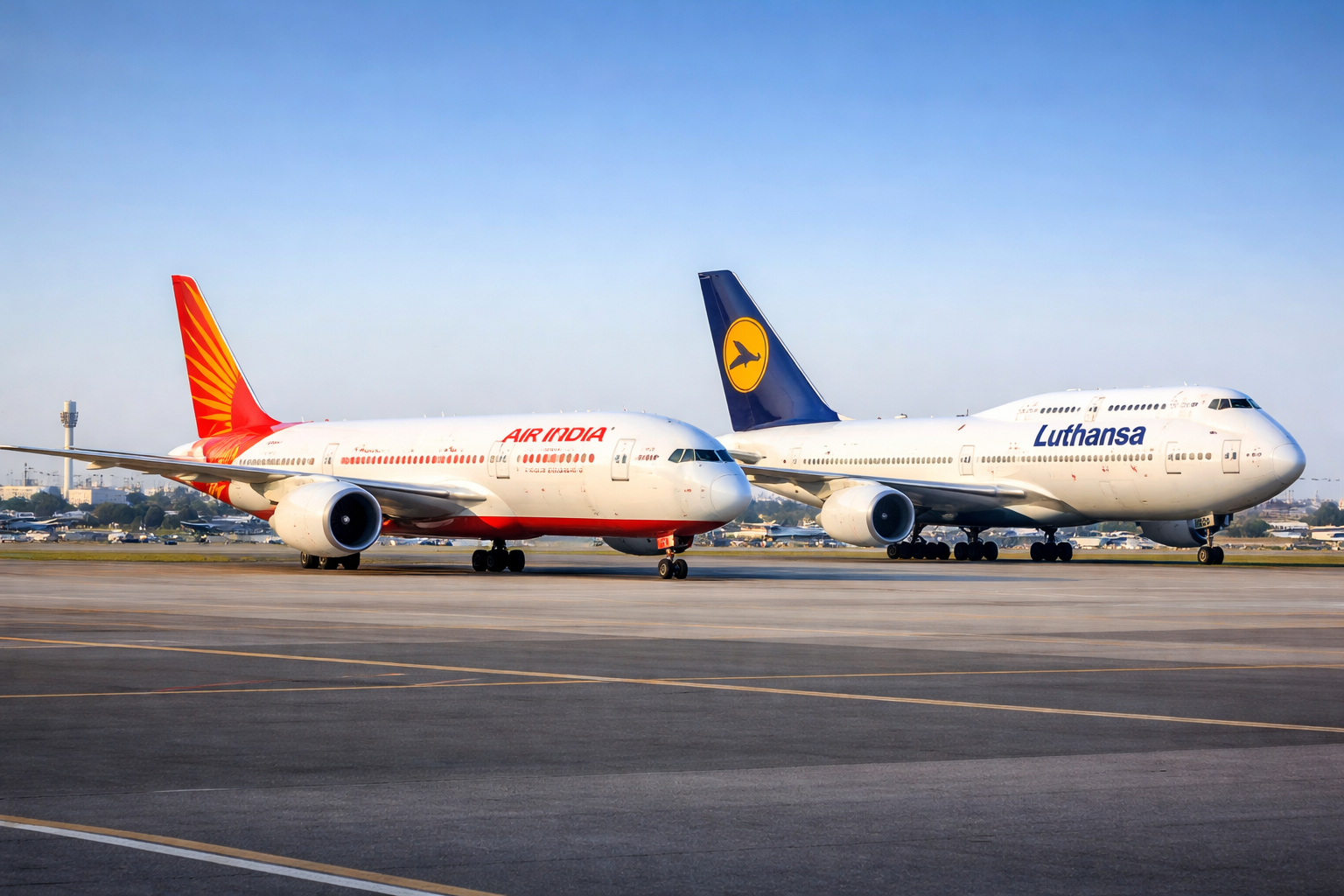
Air India and Lufthansa Group are advancing plans to significantly expand passenger traffic between India and Europe, setting the stage for one of the most consequential airline partnerships linking the two regions. The carriers confirmed they are preparing a comprehensive joint business agreement that would allow them to coordinate schedules, routes, pricing strategy, and commercial planning—an arrangement widely regarded in aviation as the highest level of cooperation short of a merger.
The initiative reflects a calculated response to rapidly rising travel demand between India and Europe, fueled by trade growth, corporate mobility, diaspora travel, and tourism. With both markets experiencing strong economic momentum, the airlines are positioning themselves to capture a larger share of long-haul traffic flows while strengthening their competitive position against rival global airline alliances.
Strategic Framework for a Deeper Partnership
Executives from both companies signed a memorandum of understanding that lays the groundwork for a future joint business structure covering services between India and Europe. The framework, formalized by Lufthansa Group CEO Carsten Spohr and Air India CEO Campbell Wilson, outlines plans for extensive collaboration across network planning, flight scheduling, digital platforms, and commercial operations. Final implementation remains subject to regulatory approvals, particularly antitrust clearance from competition authorities.
Such joint business agreements are highly influential in international aviation. They enable partner airlines to coordinate capacity and pricing as though they were a single entity on specific routes. By aligning schedules and sharing revenue, airlines can improve load factors, reduce duplication of flights, and optimize profitability while offering passengers more seamless travel options.
Initially, the partnership will concentrate on Lufthansa Group’s strongest European markets—Germany, Austria, Switzerland, Belgium, and Italy—where demand for travel to India is already robust. Subsequent phases could extend cooperation to additional European Union countries and eventually the broader Indian subcontinent, expanding network reach on both ends.
Existing Codeshare Network Provides Strong Foundation
The scale of cooperation between Air India and Lufthansa is already substantial. The airlines currently codeshare on more than 140 routes connecting 15 Indian cities with 29 European destinations across about 20 countries. This network provides passengers with coordinated itineraries and single-ticket bookings even when traveling on multiple airlines.
Because this infrastructure is already in place, the transition to a deeper joint commercial framework could be relatively swift once approvals are secured. Analysts note that existing codeshare arrangements often serve as a testing ground for joint ventures, allowing carriers to evaluate route performance, passenger demand patterns, and operational compatibility before expanding cooperation.
Lufthansa Group’s India footprint is particularly extensive. The airline operates multiple flights from Frankfurt and Munich to major Indian metros, while its subsidiaries extend that reach:
- SWISS connects Zurich with Indian destinations.
- ITA Airways links Rome and Delhi.
- Austrian Airlines operates flights from Vienna to India.
For Lufthansa Group, India has emerged as one of its most strategically important long-haul markets outside North America. Passenger volumes on India routes have climbed steadily in recent years, reflecting strong economic ties and rising outbound travel from India’s expanding middle class.
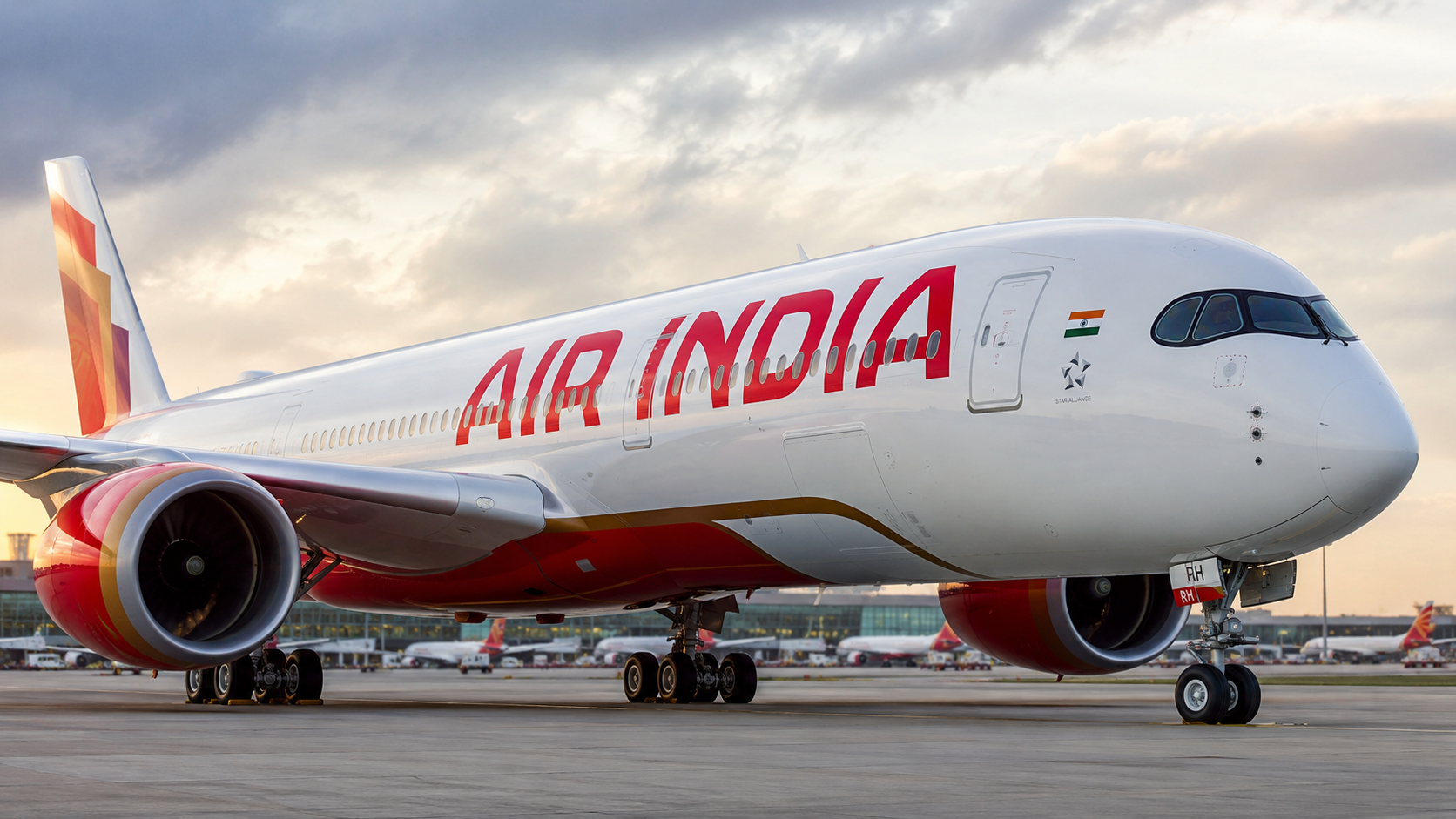
Air India, meanwhile, operates long-haul flights from Delhi and Mumbai to key European hubs such as Frankfurt, Zurich, Vienna, and Milan. With new aircraft deliveries scheduled over the coming years, the airline is expected to expand frequencies and add new destinations, making Europe a central pillar of its international growth strategy.
Economic Tailwinds From India–EU Trade Integration
The partnership comes at a time when macroeconomic conditions strongly favor expansion in India-Europe travel. The conclusion of a free trade agreement between India and the European Union is expected to stimulate business investment, supply-chain integration, and cross-border corporate activity. Historically, aviation demand tracks closely with trade flows, particularly in premium cabins where business travelers account for a disproportionate share of airline revenue.
India is widely regarded as one of the fastest-growing aviation markets globally. Several structural factors underpin this growth trajectory:
- Rapid expansion of the middle class
- Rising disposable income
- Increased international business activity
- Major airport infrastructure development
- Strong diaspora travel demand
Industry projections suggest India’s international passenger traffic could double within the next decade if current growth trends persist. European airlines see this as a strategic opportunity, while Indian carriers are eager to strengthen their presence in Europe to compete more effectively with Gulf airlines that currently dominate connecting traffic between the regions.
Competitive Dynamics in the Global Airline Sector

The proposed Air India–Lufthansa arrangement also reflects broader competitive trends shaping the aviation industry. Over the past two decades, global airlines have increasingly relied on deep partnerships and joint ventures to expand network reach without incurring the cost of launching new routes independently.
Major airline groups have already formed similar alliances:
- Air France-KLM and Delta Air Lines operate a joint transatlantic venture.
- British Airways and American Airlines coordinate extensively across North Atlantic routes.
- Qantas and Emirates cooperate on Europe-Australia traffic flows.
These partnerships allow airlines to pool resources, optimize aircraft utilization, and stabilize pricing across shared markets. For Air India and Lufthansa, deeper cooperation strengthens their position within the Star Alliance network, of which both carriers are members.
Their relationship stretches back decades. Lufthansa first began serving India in 1959, launched a codeshare agreement with Air India in 2004, and supported the Indian carrier’s entry into Star Alliance in 2014. The proposed joint business would represent the most comprehensive collaboration in their history.
Air India’s Transformation Under Tata Ownership
The expanding partnership is closely tied to Air India’s broader corporate restructuring following its acquisition by Tata Group. Since returning to private ownership, the airline has embarked on an ambitious modernization program aimed at restoring its reputation as a competitive global carrier.
Key elements of this transformation include:
Fleet Modernization
Air India has placed one of the largest aircraft orders in aviation history, securing hundreds of new jets from Airbus and Boeing. These aircraft will replace aging models, improve fuel efficiency, and enable expansion into long-haul markets such as Europe and North America.
Network Rationalization
The airline is redesigning its route system to reduce overlapping services, improve aircraft utilization, and prioritize high-yield international sectors.
Operational Upgrades
Investments in technology platforms, maintenance systems, and customer service infrastructure aim to enhance reliability and passenger experience.
The modernization push gained urgency after a fatal Boeing 787-8 accident in June 2025 intensified scrutiny of safety oversight and operational standards. Strengthening partnerships with established global carriers such as Lufthansa is viewed as a strategic step toward rebuilding trust and improving operational resilience.
Lufthansa Group’s Long-Haul Expansion Strategy
For Lufthansa Group, deeper integration with Air India aligns with its long-term growth strategy centered on premium long-haul travel. The German airline group has prioritized markets with strong business travel demand and robust economic links to Europe, making India a natural focus.
Lufthansa’s hub-and-spoke model relies on major transfer airports such as Frankfurt and Munich. By coordinating schedules with Air India’s domestic network, Lufthansa can channel passengers from secondary Indian cities into its European hubs with minimal connection times. Conversely, Air India gains access to Lufthansa’s extensive intra-European network, enabling travelers from India to reach dozens of destinations beyond primary gateways.
From a revenue-management perspective, joint planning also allows both airlines to optimize seat inventory and pricing across shared routes. Coordinated capacity decisions typically reduce the number of empty seats while limiting direct price competition between partners, thereby improving profitability.
Digital Integration and IT Collaboration
Another key pillar of the proposed partnership is cooperation in information technology systems. Integrated digital infrastructure can streamline booking platforms, synchronize loyalty programs, and facilitate real-time operational data sharing. For passengers, this translates into smoother transfers, consistent service standards, and unified customer support across airlines.
Advanced IT collaboration also enables predictive analytics for demand forecasting, dynamic pricing algorithms, and more efficient disruption management. In an era when airlines increasingly rely on data-driven decision-making, shared digital platforms can provide a substantial competitive advantage.
Regulatory Considerations and Implementation Timeline
Although both airlines have expressed strong commitment to the initiative, the partnership must undergo regulatory scrutiny before it can be fully implemented. Competition authorities will evaluate whether the arrangement could reduce consumer choice or create unfair pricing power on certain routes.
If approvals are granted, industry analysts expect the rollout to occur gradually:
- Expansion across core European markets and major Indian gateways
- Extension to additional EU destinations
- Potential inclusion of cargo cooperation and joint marketing programs
The timeline will depend on regulatory review processes, which can vary significantly by jurisdiction. However, given the existing scale of cooperation between the two airlines, many observers anticipate relatively smooth approval.
Implications for the India–Europe Aviation Corridor
The deeper alliance has the potential to reshape competitive dynamics across the India–Europe travel corridor. Currently, Gulf carriers such as Emirates, Qatar Airways, and Etihad capture a large share of connecting traffic between the regions, leveraging their geographic hubs to funnel passengers through the Middle East.
By coordinating schedules and offering seamless transfers, Air India and Lufthansa aim to retain more travelers within their own networks. Increased frequencies and improved connectivity could make nonstop or one-stop itineraries via European hubs more attractive than alternative routings.
For passengers, the partnership could deliver tangible benefits, including:
- Greater flight choice and frequency
- Shorter connection times
- Integrated loyalty rewards
- Streamlined baggage handling
- Consistent onboard service standards
Outlook
The planned Air India–Lufthansa partnership illustrates how airlines are adapting to a rapidly evolving global aviation landscape defined by rising demand, intense competition, and the need for scale. With more than 140 existing codeshare routes and a decades-long relationship already in place, the groundwork for deeper integration is strong.
If regulatory approvals are secured, the joint business could become one of the most significant intercontinental airline collaborations linking Asia and Europe. For both carriers, it represents a strategic move to secure long-term growth in a market widely expected to rank among the world’s most important aviation corridors in the coming decade.
For more on Air India, see: Air India Expands Fleet and Routes in Major Overhaul


Leave a Reply