
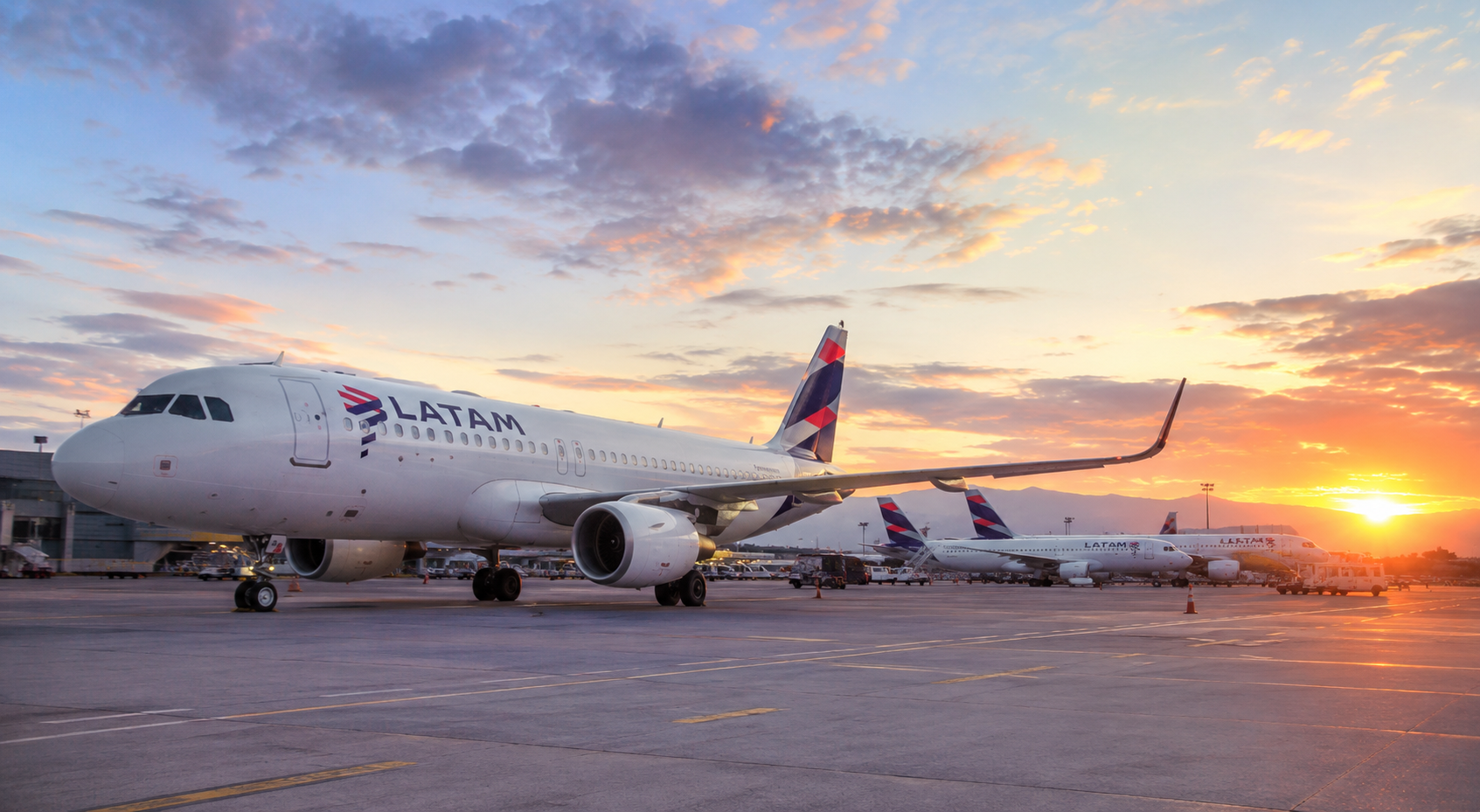
LATAM Airlines Group is moving ahead with one of the most significant pieces of its 2026 fleet renewal plan after securing approximately $505 million in long-term financing for 11 new-generation aircraft.
The package, led by BNP Paribas, covers one Airbus A320neo, four Airbus A321neos and six Embraer E195-E2s, with deliveries scheduled for the second half of the year. But the headline figure is only part of the story.
Around $400 million of the financing is sustainability-linked, meaning the economic terms are connected to LATAM’s progress on emissions intensity. It is also the first time the airline has used this type of financing structure for its Embraer aircraft.
That combination gives the transaction a broader significance. LATAM is not simply adding aircraft to an already expanding fleet. It is using financing, aircraft selection and sustainability targets together as it prepares for a larger and more flexible operation across Latin America.
LATAM is financing growth and fleet renewal at the same time
LATAM’s latest financing comes as the airline continues to take delivery of newer aircraft at a rapid pace.
The carrier added 13 next-generation aircraft during the first half of 2026 and expects another 28 deliveries before the end of the year. That would put annual additions at more than 40 aircraft and help LATAM finish 2026 with a fleet of more than 410 aircraft.
The $505 million transaction therefore fits into a much larger fleet strategy rather than representing an isolated purchase.
LATAM expects to add as many as 130 aircraft by 2030, while more than half of its fleet is projected to consist of next-generation aircraft. The airline is also preparing for the arrival of its first Airbus A321XLR in 2027, adding another option for longer routes that may not require a widebody aircraft.
For LATAM, fleet growth is increasingly about having the right aircraft available for different markets.
That is where the composition of this latest 11-aircraft package becomes particularly interesting.
Why LATAM is adding three different aircraft types
The new fleet investment combines five Airbus A320neo-family aircraft with six Embraer E195-E2s.
The Airbus portion consists of one A320neo and four A321neos. These aircraft will strengthen LATAM’s larger single-aisle operation, while the six E195-E2s are intended to give the airline a smaller-capacity option for its Brazilian domestic network.
That matters because not every route can support the same aircraft.
An A321neo can carry substantially more passengers than an A320neo, making it useful when demand is strong enough to justify additional capacity. On thinner routes, however, putting a larger narrowbody into service can leave too many seats to fill.
The E195-E2 provides LATAM with another step in the capacity ladder.
Instead of choosing between a smaller regional aircraft and an Airbus A320-family jet, the airline can use the Embraer E2 to better match capacity with demand.
That flexibility could become increasingly important as LATAM continues to expand its network while trying to keep aircraft utilization and route economics in balance.
The A320neo and A321neo strengthen LATAM’s core network
The Airbus A320neo remains one of the key aircraft in the modern single-aisle market. Airbus says the A320neo can fly up to 3,400 nautical miles and offers a 20% reduction in fuel burn and CO₂ emissions per seat compared with the previous generation.
For LATAM, the aircraft is well suited to the high-frequency short- and medium-haul flying that forms an important part of its regional network.
The A321neo, meanwhile, offers greater passenger and payload capacity while retaining the commonality of the A320 family.
That commonality is valuable for an airline operating a large fleet. Airbus notes that the A320 family shares common cockpit architecture and operating procedures, allowing airlines to maintain significant commonality across variants.
The A321neo can therefore give LATAM additional capacity without requiring the airline to move into a completely different aircraft family.
It is a relatively straightforward way to increase seats on routes where demand warrants a larger narrowbody.
The bigger strategic opportunity could come with the A321XLR.
LATAM’s planned introduction of the type in 2027 will add a longer-range single-aisle aircraft to the fleet, potentially opening opportunities for routes that sit between conventional narrowbody operations and widebody flying.
Six E195-E2s could change how LATAM serves Brazil
The most distinctive part of the latest financing is arguably the six Embraer E195-E2 aircraft.
LATAM plans to introduce the type into its Brazilian domestic operation, giving the airline a new tool for routes where an A320-family aircraft may be larger than necessary.
The E195-E2 is designed specifically around this part of the market. Embraer describes it as the largest aircraft in the E-Jet E2 family and says its design is focused on efficiency on high-frequency routes. The manufacturer currently cites up to a 29% reduction in fuel consumption compared with previous-generation E-Jets.
Embraer also lists the E195-E2 as accommodating between 120 and 146 passengers, depending on configuration.
That gives LATAM an aircraft that can sit below its Airbus narrowbodies in capacity while still offering the economics and technology of a new-generation jet.
There is another passenger benefit worth noting.
The E-Jet family uses a 2-2 cabin layout, meaning passengers do not have to contend with a middle seat. Embraer also highlights connectivity and other cabin features on the E2 family.
For LATAM, the aircraft could therefore provide both network flexibility and a differentiated passenger experience.
$400 million of the financing is linked to sustainability
The financing structure is arguably as important as the aircraft themselves.
Approximately $400 million of the $505 million package is sustainability-linked, with financial incentives tied to LATAM’s emissions-intensity performance.
That distinction matters.
A conventional aircraft financing arrangement primarily focuses on funding the aircraft and servicing the associated debt. A sustainability-linked loan, by contrast, can connect financial terms to predetermined environmental performance indicators.
In LATAM’s case, the structure means that improvements in emissions intensity can have a direct relationship with the financing conditions.
The airline has set a target of reducing emissions intensity by 6% by 2030 compared with 2019 and maintains a longer-term ambition of achieving net-zero emissions by 2050.
The transaction also builds on LATAM’s previous use of sustainability-linked financing. In December 2024, the airline secured a $300 million sustainability-linked revolving credit facility backed by engines.
The latest deal takes that strategy further by applying the structure to aircraft financing and, for the first time, to LATAM’s Embraer fleet.
New aircraft give LATAM another efficiency advantage
The aircraft themselves also support the airline’s efficiency objectives.
Airbus says the A320neo family provides at least a 20% fuel-burn and CO₂ emissions advantage per seat compared with previous-generation aircraft.
Embraer says the E195-E2 can deliver up to a 25% reduction in fuel burn per seat compared with previous-generation E-Jets, while its current product material cites an even larger improvement in fuel consumption versus the previous E-Jet generation depending on the comparison used.
Those are manufacturer comparisons rather than guarantees of the savings LATAM will achieve on every route. Actual fuel consumption depends on factors including stage length, payload, cabin configuration, weather, engine performance and operating procedures.
Still, the direction of the fleet strategy is clear.
LATAM is replacing older-generation capacity with aircraft designed to use less fuel per seat while giving the airline more options when matching aircraft size to demand.
LATAM’s fleet strategy is becoming more flexible
The significance of the $505 million financing goes beyond the 11 aircraft covered by the transaction.
The A320neo gives LATAM another efficient core narrowbody. The A321neo allows the airline to add capacity on stronger routes. The E195-E2 creates a smaller-gauge option for Brazilian domestic flying.
Together, they give LATAM three different ways to approach network growth.
That is particularly useful for an airline with a geographically diverse network, where demand can vary significantly between major city pairs and thinner regional markets.
It also means LATAM does not have to rely on one aircraft size to drive expansion.
A bigger LATAM is taking shape
The latest financing is ultimately a sign of where LATAM wants to be several years from now.
The airline is growing its fleet, adding more next-generation aircraft and preparing for the A321XLR while simultaneously looking for financing structures that support its environmental targets.
By the end of 2026, LATAM expects to operate more than 410 aircraft. Its longer-term plan calls for up to 130 additional aircraft by 2030, with next-generation jets accounting for more than half of the fleet.
The $505 million package is therefore one piece of a much bigger transformation.
For passengers, the most visible result will be more new aircraft entering service. For LATAM, however, the more important change is the flexibility behind those aircraft: more capacity where demand is strong, smaller jets where markets are thinner, and newer technology across both parts of the fleet.
And with roughly $400 million of the financing linked to sustainability performance, LATAM is also putting financial weight behind its emissions goals.
That makes the latest aircraft financing more than a routine fleet transaction. It is another indication that LATAM’s next phase of growth is being built around capacity, efficiency and sustainability at the same time.
For more on LATAM, see: LATAM Targets Premium Edge With A321XLR Rollout





Leave a Reply