
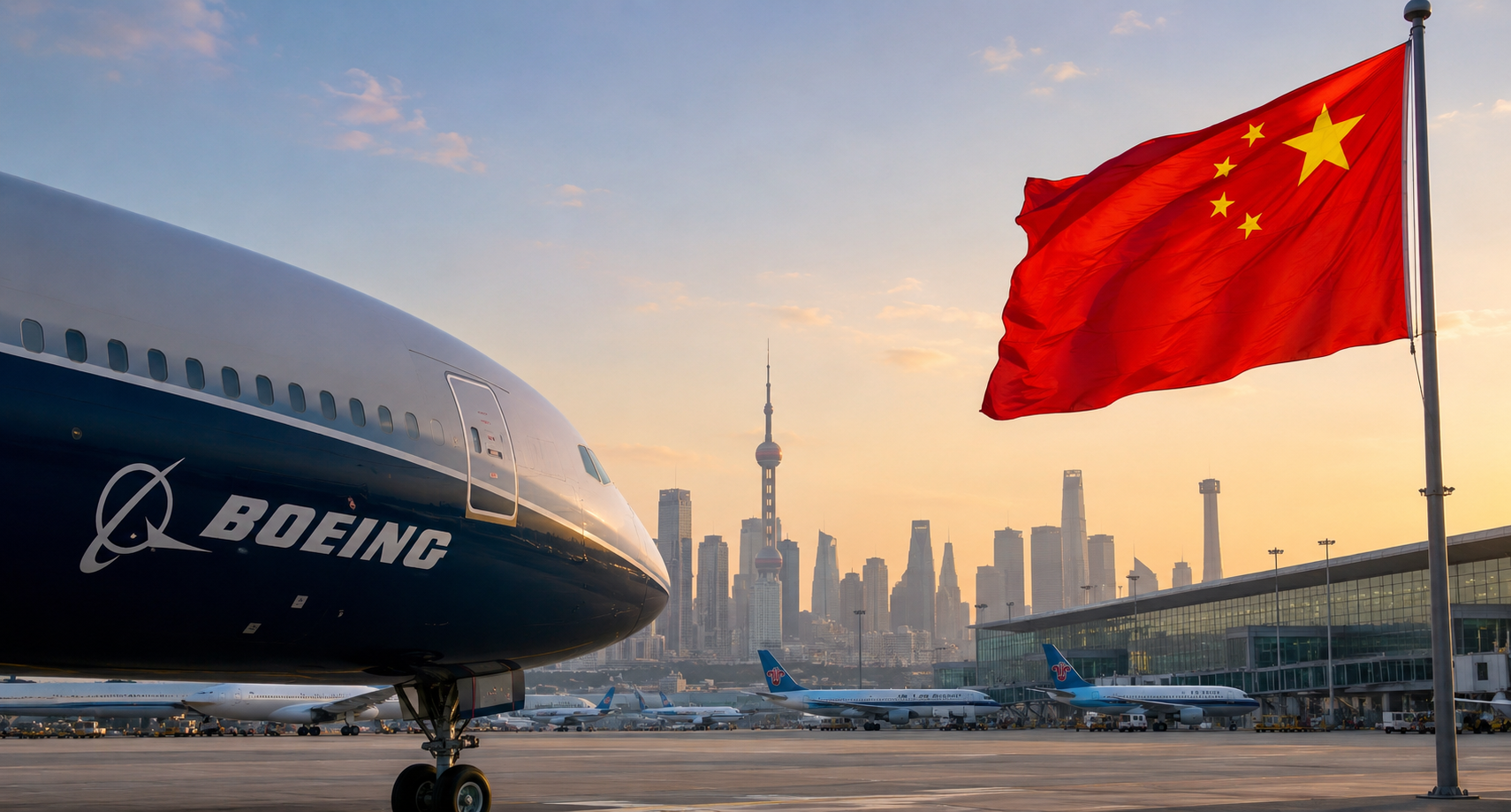
Boeing is edging closer to what could become one of the most significant commercial aircraft agreements ever signed, as the American aerospace manufacturer works toward finalizing a major order from China that may eventually encompass as many as 700 aircraft.
The proposed arrangement, which currently centers on an initial commitment for 200 Boeing jets, has the potential to expand substantially over the coming years. If follow-on purchases materialize as expected, the combined total could place the agreement among the largest aircraft procurement programs in the history of global aviation.
The development represents more than just a boost to Boeing’s order book. It signals a possible thaw in a relationship that has been strained by geopolitical tensions, regulatory disputes, aircraft certification issues, and the long-lasting effects of the COVID-19 pandemic.
Initial 200-Aircraft Order Nearing Completion
Speaking to reporters in Hong Kong, Boeing Chief Executive Officer Kelly Ortberg indicated that the company expects the previously announced agreement covering 200 aircraft to be finalized before the end of the year.
While discussions surrounding the deal have been ongoing for months, the formal completion of the contract remains an important milestone. Aviation industry observers note that transactions involving China often require lengthy negotiations and multiple layers of government approval, making final execution just as important as the initial announcement.
The framework agreement emerged during a period of renewed economic engagement between Washington and Beijing. As part of broader trade discussions, aircraft purchases were highlighted as a strategic area where both nations could strengthen commercial ties.
The current package reportedly includes not only aircraft but also engines, spare parts, maintenance support, and other aviation-related services. Such comprehensive agreements are common in large fleet acquisitions, ensuring airlines receive long-term operational support alongside new aircraft deliveries.
However, several details remain undisclosed. Boeing and Chinese authorities have not publicly identified the exact mix of aircraft models, delivery timelines, or how the aircraft will be distributed among China’s major carriers.
China’s Airlines Need New Capacity
Industry expectations suggest the order will include a combination of narrowbody and widebody aircraft.
The Boeing 737 MAX is widely viewed as a likely cornerstone of the deal, given its importance in short- and medium-haul operations. Chinese airlines are also expected to seek larger aircraft capable of supporting international expansion as long-haul travel demand continues recovering.
China’s three largest state-owned airlines—Air China, China Eastern Airlines, and China Southern Airlines—are expected to receive a significant share of the aircraft once allocations are finalized.
The timing aligns with a growing need for fleet renewal across the Chinese aviation sector. Many airlines are operating aircraft that are approaching replacement age, while disruptions in recent years have slowed fleet modernization efforts.
Before the pandemic, China was widely regarded as the world’s fastest-growing major aviation market. Although growth temporarily stalled, domestic traffic has rebounded strongly, and international capacity continues to recover. As airlines rebuild networks and prepare for future expansion, the demand for new-generation fuel-efficient aircraft has become increasingly important.
For Boeing, meeting that demand represents a crucial opportunity to regain momentum in a market that once accounted for a substantial portion of its commercial aircraft deliveries.
Boeing’s Long Road Back Into China
The significance of the agreement extends beyond the aircraft themselves.
For much of the past decade, Boeing has faced considerable challenges in China. The grounding of the 737 MAX following two fatal accidents significantly damaged confidence in the aircraft. Subsequent certification delays, trade disputes between the United States and China, and pandemic-related disruptions further complicated Boeing’s position in one of its most important international markets.
As a result, Chinese airlines largely paused major Boeing purchases, while European rival Airbus gained substantial market share.
The lack of significant new Chinese orders became particularly noticeable as global airline demand accelerated following the pandemic recovery. While Boeing continued securing deals elsewhere, access to China remained limited.
A finalized 200-aircraft agreement would therefore represent more than a commercial win. It would serve as evidence that Boeing is rebuilding relationships with Chinese regulators, airlines, and government stakeholders.
Equally important are assurances regarding production quality and delivery reliability. Chinese authorities have historically taken a cautious approach toward aircraft certification and acceptance. Given the political and economic visibility surrounding Boeing deliveries, maintaining confidence in product quality will remain essential throughout the implementation of any agreement.
A Much Larger Opportunity on the Horizon
Although the immediate focus remains on securing the first 200 aircraft, industry attention is increasingly turning toward what may come next.
Reports circulating within aviation circles have suggested that Chinese planners could ultimately require several hundred additional aircraft beyond the current commitment. Some estimates place the potential total closer to 500 aircraft, while others suggest even higher figures depending on future market growth.
When combined with the initial order, Boeing’s cumulative sales could approach 700 aircraft.
Such a figure would be extraordinary by any industry standard. Large aircraft orders involving hundreds of jets are rare, particularly when spread across multiple airlines and years of deliveries.
The potential expansion reflects China’s long-term aviation outlook. Forecasts consistently rank the country among the world’s largest future sources of passenger traffic growth. Rising middle-class travel demand, continued urbanization, and expanding international connectivity are expected to drive substantial fleet requirements over the next two decades.
For Boeing, securing a meaningful share of that growth is strategically vital.
Opportunities Accompanied by Significant Risks
Despite the optimism surrounding the negotiations, considerable uncertainty remains.
Aircraft purchases of this scale involve complex financial arrangements, production scheduling challenges, government approvals, and long-term economic forecasts. Any one of these factors can influence the pace and size of future commitments.
Geopolitical considerations also remain a major variable. Relations between the United States and China have improved and deteriorated multiple times over the past decade, often affecting industries considered strategically important. Aerospace is among the sectors most exposed to such shifts.
Because aircraft deliveries would likely be spread across many years, Boeing faces the challenge of maintaining stable commercial relations throughout the duration of the program. Changes in trade policy, regulatory environments, or diplomatic relations could affect future procurement decisions.
Nevertheless, the potential rewards are substantial.
A combined order approaching 700 aircraft would significantly strengthen Boeing’s production backlog, support thousands of jobs across its manufacturing and supplier network, and reinforce the company’s long-term presence in one of aviation’s most critical growth markets.
For China, the agreement would provide access to modern, fuel-efficient aircraft needed to support fleet renewal and expanding passenger demand. It would also reinforce commercial ties with one of the world’s largest aerospace manufacturers.
While the final outcome remains uncertain, the negotiations highlight the strategic importance of aviation as both an economic and diplomatic bridge. If Boeing succeeds in converting the current framework into a long-term procurement program, the agreement could reshape the company’s position in China and become one of the defining commercial aviation deals of the decade.
For more on Boeing, see: Boeing Targets Rwanda as East Africa Aviation Expands


Leave a Reply