

Rolls-Royce is accelerating development of its next-generation UltraFan engine family as it prepares to restart testing of the UltraFan 80 demonstrator later this year while simultaneously advancing the smaller UltraFan 30 toward its first engine run in 2028. Together, the two programmes represent the company’s long-term strategy to introduce more efficient propulsion technology for both widebody and future narrowbody aircraft.
The British engine manufacturer has already completed an initial round of testing on the larger UltraFan demonstrator, but engineers say the next phase will be essential for validating new technologies, refining the geared architecture, and bringing the engine closer to commercial readiness.
With airlines seeking greater fuel efficiency and lower emissions, and aircraft manufacturers planning future generations of commercial jets, Rolls-Royce believes UltraFan will eventually become one of the industry’s most important propulsion platforms.
UltraFan 80 Returns to the Test Cell
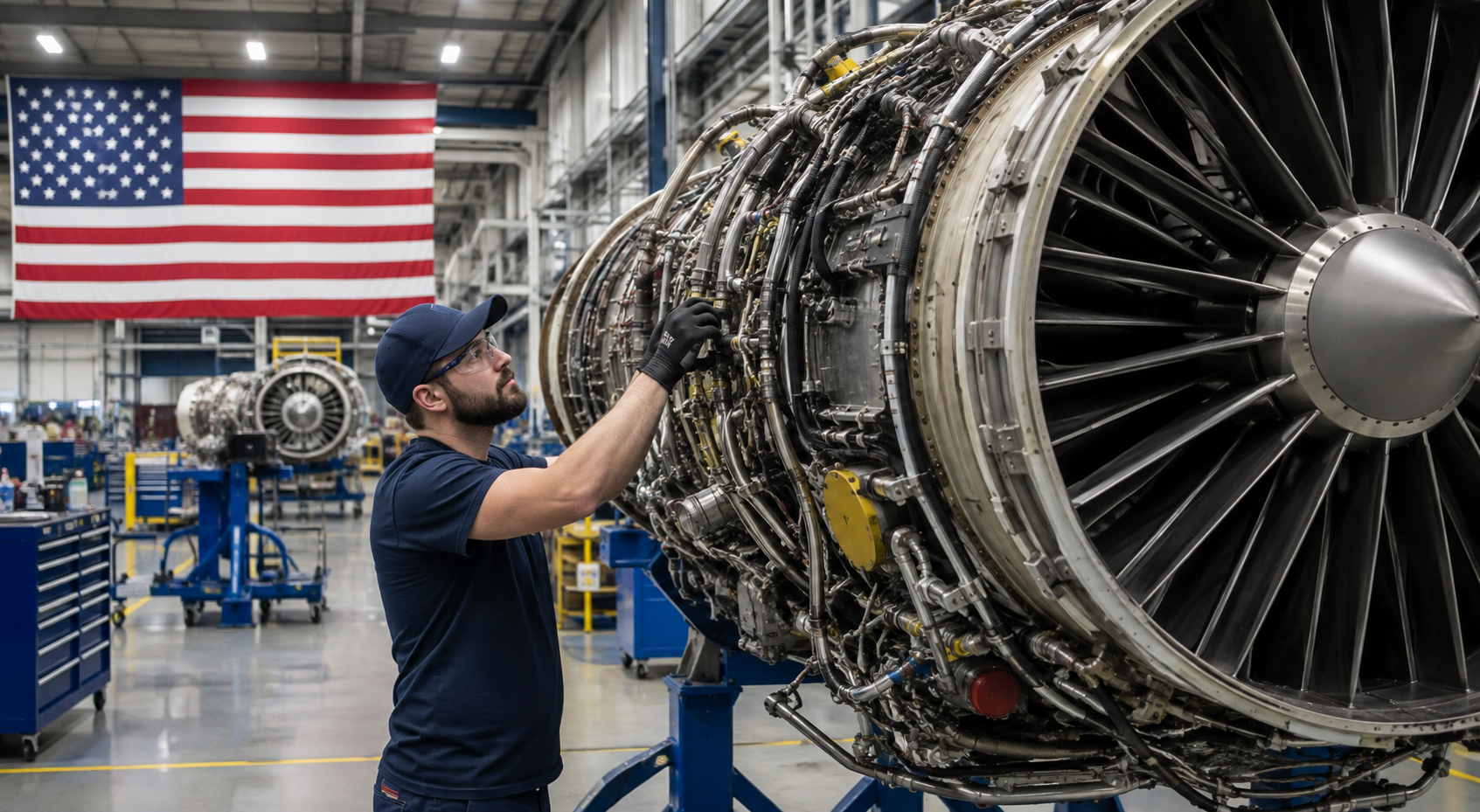
Assembly is now underway on the UltraFan 80 demonstrator at Rolls-Royce’s Derby headquarters, with engineers integrating major engine components before returning the powerplant to Testbed 80 later this year.
The demonstrator, designed to produce approximately 85,000 pounds of thrust, previously accumulated around 70 hours of ground testing during its first campaign in 2023. While those early tests successfully validated many of the engine’s core concepts, Rolls-Royce views the upcoming campaign as a much more comprehensive evaluation of the engine’s architecture.
According to Jeremy Hughes, Head of Demonstrator Programmes, the power gearbox has already been joined to the engine core, with installation of the fan case scheduled next before the complete engine returns to testing.
The renewed campaign is intended not only to verify performance improvements but also to assess long-term durability and reliability across the engine’s entirely new low-pressure system.
Unlike conventional turbofan designs, UltraFan introduces a significantly different mechanical layout, making extensive validation critical before the technology can progress toward commercial applications.
Improvements Based on Earlier Testing
Engineers have incorporated numerous design changes following lessons learned during the first UltraFan test programme.
Rather than simply repeating previous evaluations, the upcoming campaign will examine updated hardware throughout the engine core while gathering additional operational data under a wider range of conditions.
Rolls-Royce expects these refinements to improve both efficiency and robustness while reducing technical risk as development continues.
The company says the revised engine will allow engineers to better understand not only overall performance but also the long-term durability of the advanced geared architecture and associated systems.
This approach reflects the increasingly rigorous validation required for modern aircraft engines, where reliability and maintainability are just as important as fuel efficiency.
UltraFan 30 Moves Closer to Reality
While attention remains focused on the widebody demonstrator, Rolls-Royce is making steady progress on the smaller UltraFan 30 programme.
Designed to deliver roughly 30,000 pounds of thrust, the engine targets future narrowbody aircraft that are expected to enter service during the next decade.
The company recently completed the concept review for UltraFan 30, marking another significant milestone after unveiling the design earlier this year.
Rolls-Royce is now transitioning from conceptual engineering into hardware production, working with suppliers across its global manufacturing network to prepare components for the demonstrator.
Current plans call for the first engine run in 2028, providing an important technology demonstrator for future single-aisle aircraft programmes.
Existing Technology Supports Development
To accelerate development, the UltraFan 30 demonstrator will initially utilize the proven core from Rolls-Royce’s Pearl business jet engine family.
However, engineers are simultaneously developing a significantly more advanced hot section that could eventually replace the existing configuration.
This work may evolve from the Advance2 core architecture that already underpins the latest Pearl engines.
By combining mature technologies with newly developed components, Rolls-Royce hopes to reduce technical risk while continuing to introduce substantial performance improvements over time.
The phased approach allows engineers to validate the geared architecture before integrating more advanced combustion and turbine technologies into future development stages.
Engineering Challenges Remain
Scaling UltraFan technology from widebody to narrowbody applications presents several engineering challenges.
One of the most demanding areas involves shrinking the highly advanced power gearbox while maintaining the strength, efficiency, and durability required for commercial airline operations.
Rolls-Royce says extensive gearbox development is now underway, with multiple testing programmes continuing throughout late 2026 and into 2027.
Beyond engineering, the company is also preparing its industrial supply chain for the production rates expected in the narrowbody market.
Unlike widebody aircraft, which are manufactured in relatively modest numbers, single-aisle aircraft require engine manufacturers to support substantially higher annual production volumes.
Ensuring suppliers can meet these future demands forms a major part of the UltraFan development strategy.
New Aerodynamic Technologies
The UltraFan 30 also introduces several aerodynamic innovations that are not yet featured on the larger demonstrator.
Among these are a shorter engine inlet and ripple-edged outlet guide vanes, both designed to improve airflow and enhance overall engine efficiency.
Rolls-Royce believes these technologies may eventually migrate to the UltraFan 80 following encouraging results from previous research programmes.
Earlier testing, including flight evaluations conducted in partnership with Boeing, demonstrated positive aerodynamic performance from the short-inlet configuration.
Additional validation continues through specialized test facilities across Europe.
At the German-Dutch wind tunnel in Marknesse, engineers are studying airflow between the inlet and fan, while another research programme in Darmstadt focuses on the aero-mechanical behavior of the fan system itself.
These highly specialized tests provide critical data before technologies are incorporated into future demonstrators.
Flight Testing Still on the Roadmap
Although UltraFan has completed extensive ground testing, Rolls-Royce ultimately intends to validate the engine in flight.
Achieving flight-test status represents a major milestone because it demonstrates the technology has reached Technology Readiness Level 6—a key benchmark for advanced aerospace systems.
The company has not yet selected an aircraft to serve as the flying testbed, although executives say multiple options remain under consideration.
Rather than rushing the decision, Rolls-Royce plans to continue maturing the engine through additional ground testing before committing to a flight demonstration platform.
Narrowbody Strategy Depends on Partnerships
While the technology continues to mature, Rolls-Royce is still determining how UltraFan 30 could eventually enter commercial production.
Rob Watson, President of Rolls-Royce Civil Aerospace, says the company remains open to a variety of partnership structures as it evaluates the most effective route into the narrowbody engine market.
Collaboration remains the preferred option, although Rolls-Royce has indicated it is also prepared to proceed independently if necessary.
Breaking into the single-aisle market presents a considerable challenge.
Today’s narrowbody sector is dominated by CFM International and Pratt & Whitney, whose engines power the vast majority of Airbus A320neo and Boeing 737 MAX family aircraft.
Future opportunities are expected to emerge when Airbus and Boeing launch their next generation of single-aisle aircraft around the end of this decade.
Widebody Opportunities May Come First
The commercial outlook may be more immediate in the widebody segment, where aircraft manufacturers typically offer multiple engine options and no single supplier controls the market.
Although industry observers have occasionally suggested UltraFan 80 could be used to re-engine an existing aircraft platform, Rolls-Royce believes its performance improvements are substantial enough to justify an entirely new aircraft design.
The company continues discussions with both Airbus and Boeing regarding future propulsion opportunities, though neither manufacturer has publicly committed to a next-generation widebody programme.
As airlines pursue lower operating costs and increasingly stringent environmental targets, UltraFan could become one of the industry’s defining engine technologies. By advancing both widebody and narrowbody variants simultaneously, Rolls-Royce is positioning itself to compete across the full commercial aviation market as aircraft manufacturers prepare for the next era of fleet development.
For more on Rolls-Royce, see: Rolls-Royce Engine Delivers Unexpected Fuel Savings












Leave a Reply