
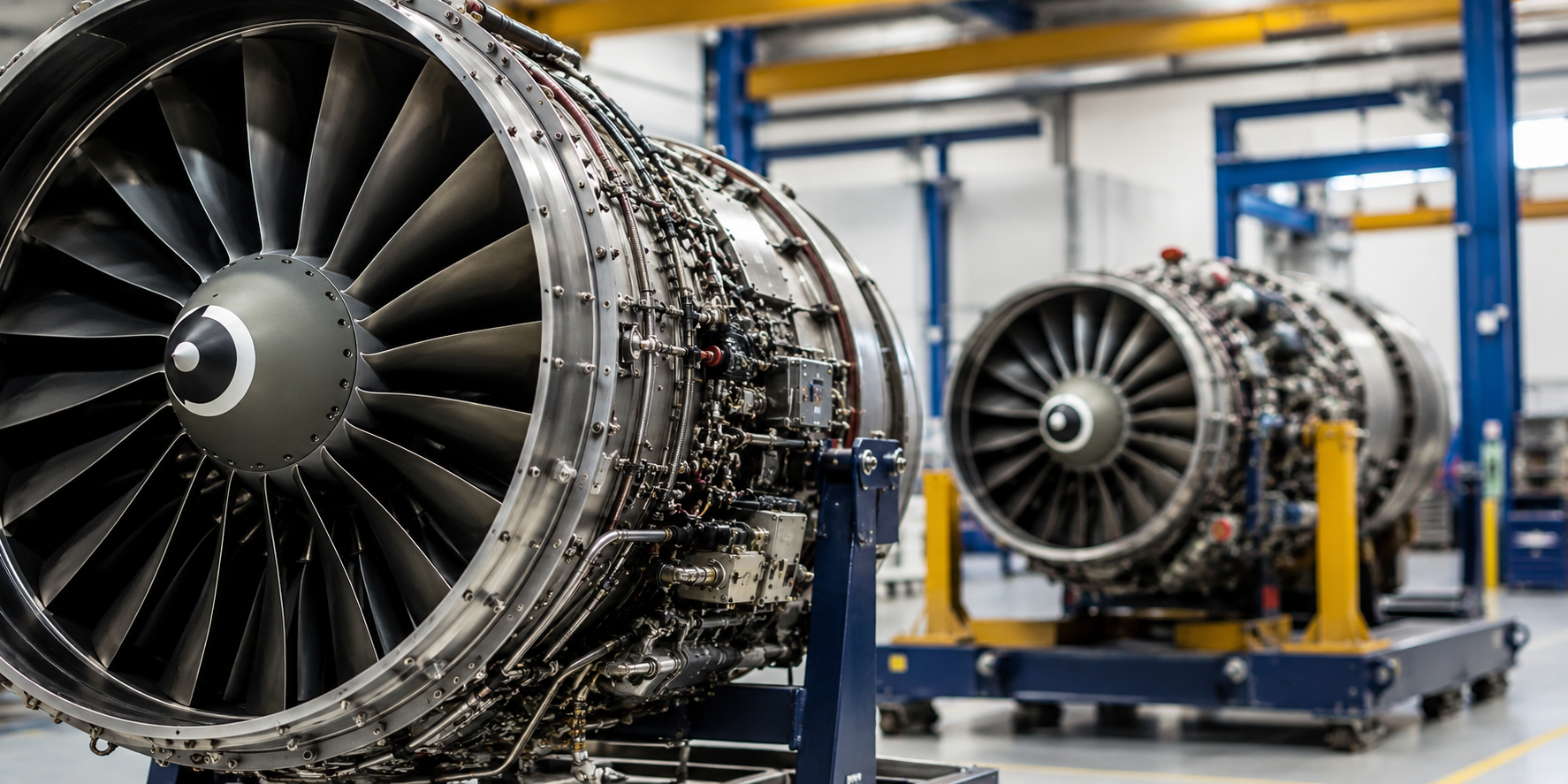
Barnes Aerospace is making a bigger move into the commercial aircraft aftermarket with the completed acquisition of Jet AirWerks, a Kansas-based company specializing in aeroengine component inspection, repair, overhaul and disassembly.
The deal gives Barnes Aerospace additional repair capabilities and technical expertise while broadening its component repair and overhaul, or CRO, business. More importantly, it puts the company in a stronger position to support operators running some of the aviation industry’s most widely used commercial engine families.
Jet AirWerks works primarily on components associated with the CFM56, CF6 and CF34 engine families. Those engines may no longer represent the newest generation of propulsion technology, but they continue to support a large installed fleet, creating steady demand for inspections, repairs and overhaul work.
Financial details of the transaction were not disclosed.
Barnes adds established repair capabilities
Jet AirWerks was founded in 2007 and operates as an FAA Part 145 Repair Station in Arkansas City, Kansas. The company has built its business around commercial aeroengine components and has developed an extensive portfolio of approved repairs and in-house processing capabilities.
Its regulatory approvals extend beyond the United States. Jet AirWerks holds certifications from the FAA, the European Union Aviation Safety Agency, the Civil Aviation Administration of China and the UK Civil Aviation Authority.
For Barnes Aerospace, that experience is an important part of the acquisition.
Rather than building an entirely new set of repair processes internally, Barnes gains access to an established operation with trained personnel, existing approvals and years of experience working on commercial engine components.
That should allow the company to broaden the range of work it can offer customers while adding capacity to its existing component repair operations.
“Jet AirWerks is a strong strategic fit that advances Barnes Aerospace’s long-term growth strategy while expanding our ability to solve increasingly complex turbine engine challenges for our customers,” Barnes Aerospace CEO Mike Mosley said.
Why the CFM56 remains important
The CFM56 is particularly significant to the deal because of the sheer size of its installed base.
The engine family has powered thousands of Airbus A320ceo and Boeing 737 Next Generation aircraft, many of which remain active with airlines and other operators. While newer aircraft are increasingly equipped with engines such as the CFM LEAP and Pratt & Whitney GTF, the CFM56 aftermarket will remain relevant for years.
The same principle applies to the CF34 and CF6.
CF34 engines have powered a large number of regional and smaller commercial aircraft, while CF6 engines have been used across several generations of widebody and freighter aircraft.
That creates a sizeable pool of components that will continue to require maintenance even as airlines gradually modernize their fleets.
For an aerospace supplier, the aftermarket opportunity can therefore last long after an engine stops being installed on new aircraft.
Repair is becoming a bigger part of the aviation equation
The timing of the acquisition is also notable.
Airlines and lessors are dealing with long aircraft delivery timelines, maintenance bottlenecks and continued demand for capacity. Many operators are consequently keeping older aircraft in service for longer, increasing the importance of reliable maintenance support.
That does not mean every component will be repaired rather than replaced. But when a certified repair is available, it can provide operators with another option and help control the cost and timing of maintenance.
This is where specialized component repair businesses can become particularly valuable.
Jet AirWerks brings Barnes a portfolio of approved repairs and internal processing capabilities that can potentially reduce the number of steps required to manage certain component work.
For customers, the attraction is straightforward: broader capability, established repair expertise and access to a supplier that can support more stages of the engine component lifecycle.
Barnes is building beyond manufacturing
The acquisition also reflects a broader change in Barnes Aerospace’s strategy.
The company is not solely focused on manufacturing new aerospace components. It is building a business that combines manufacturing, engineering, repair and aftermarket support.
Barnes Aerospace supplies complex engine components for commercial and defense aerospace applications, with capabilities covering areas from fan to exhaust. Its customer base includes aircraft and engine manufacturers, airlines and MRO providers.
Adding Jet AirWerks gives that business a stronger commercial engine aftermarket component.
John McKirdy, senior vice president of strategy and growth, CRO at Barnes Aerospace, said expanding the company’s component repair and overhaul operation is a key part of its growth strategy.
He said Jet AirWerks expands Barnes’ repair portfolio and technical capabilities while strengthening customer support across the aeroengine lifecycle.
That lifecycle approach is becoming increasingly important in aerospace.
A component may begin life as a newly manufactured part, spend years operating on an aircraft, undergo multiple inspections and repairs, and eventually be removed and processed again. Companies that can participate in several of those stages have more opportunities to build long-term relationships with customers.
Keeping Kansas aerospace expertise in the business
The acquisition also expands Barnes Aerospace’s presence in South Central Kansas, a region with deep roots in the aviation industry.
Jet AirWerks founder, President and CEO Keith Humphrey highlighted that history, describing the region as the “Air Capital of the World” and saying the company has been proud to carry that tradition forward.
For Barnes, retaining Jet AirWerks’ operation and expertise in the region adds another specialized aerospace location to its network.
The integration will also be closely watched by customers and employees. Barnes said its priorities include maintaining business continuity, supporting Jet AirWerks employees and ensuring that customer service remains uninterrupted during the transition.
That will be important because MRO customers generally have little tolerance for disruption. A repair facility is often supporting aircraft and engines that are already tied to maintenance schedules, flight operations and fleet planning.
What Barnes gets from the acquisition
The most significant benefit may not be the physical expansion of Barnes Aerospace’s footprint. It is the addition of specialist knowledge.
Jet AirWerks has spent nearly two decades developing its commercial engine component repair business. Its approved repair portfolio and in-house processing capabilities give Barnes access to expertise that would take considerable time to reproduce organically.
The acquisition also gives Barnes greater exposure to the installed base of CFM56, CF6 and CF34 engines.
That matters because the commercial aerospace aftermarket is driven by the aircraft already flying, not only by the jets currently being delivered.
New aircraft programs attract headlines, but thousands of older aircraft continue to generate maintenance work every day. As long as those aircraft remain economically useful to operators, their engines and components will need to be inspected, repaired and overhauled.
Barnes Aerospace is positioning itself to capture more of that work.
A strategic move into the long-term aftermarket
The Jet AirWerks acquisition is ultimately about more than adding another repair operation to Barnes Aerospace.
It strengthens a business that sits between aerospace manufacturing and MRO and gives Barnes more ways to support customers after an aircraft component enters service.
The company now has additional commercial engine expertise, approved repair capabilities and processing resources covering three important engine families. Combined with Barnes Aerospace’s existing manufacturing and engineering operations, those assets could help the company take on a broader share of customer requirements.
For airlines and MRO providers, the value will come down to practical matters such as repair capability, turnaround times, technical expertise and reliable support.
For Barnes Aerospace, the strategic opportunity is larger.
As airlines continue operating large numbers of established aircraft alongside newer-generation fleets, the demand for engine component aftermarket services is likely to remain an important part of the aviation industry.
Barnes is now better positioned to participate in that market.
The Jet AirWerks acquisition gives the company an established platform from which to expand its commercial engine MRO capabilities rather than starting from scratch. In an industry where keeping aircraft flying is just as important as delivering new ones, that could prove to be a valuable addition to Barnes Aerospace’s long-term growth strategy.
For more on Barnes Aerospace, see: Forward‑Thinking Aerospace: From Bespoke MRO for AerCap to Engine‑Component Expansion via Barnes/EHO Deal










Leave a Reply