
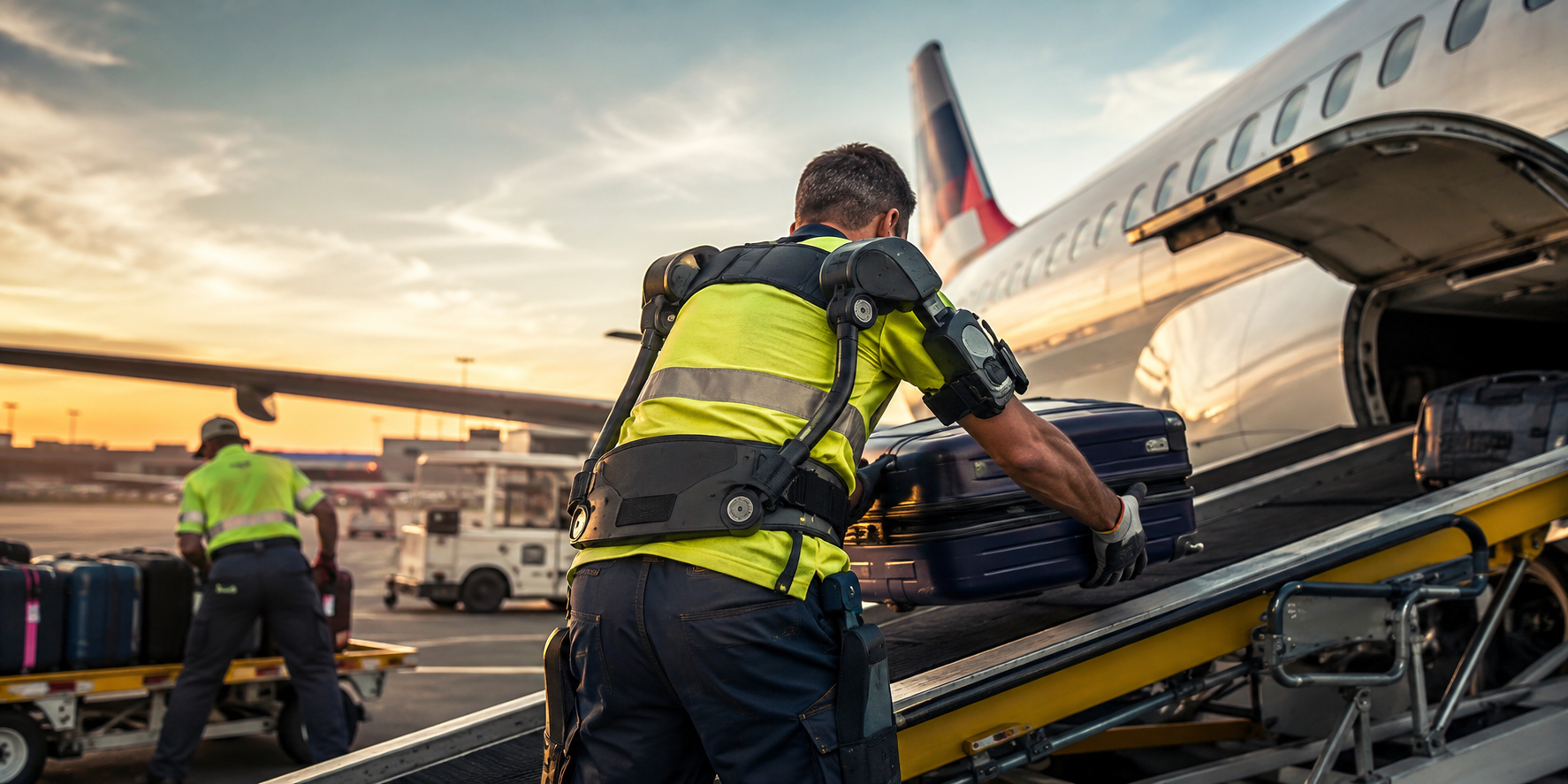
IAG Invests in Verve Motion to Advance Wearable Robotics for Aviation
International Airlines Group (IAG) is expanding its investment in emerging aviation technologies with a strategic stake in wearable robotics developer Verve Motion. The move highlights the airline group’s growing focus on improving employee safety, operational resilience, and efficiency through innovative technologies designed specifically for physically demanding aviation environments.
The investment has been made through IAGi Ventures, the group’s corporate venture capital arm, which supports startups developing solutions that can address operational challenges across the aviation industry. By backing Verve Motion, IAG is taking another step toward modernizing airport ground handling operations while exploring new ways to reduce workplace injuries among frontline employees.
The partnership will see both companies collaborate on developing and testing an aviation-focused wearable exosuit that could transform the way baggage handlers and cargo personnel perform repetitive lifting tasks.
Strategic Investment Supports Aviation Innovation
IAG’s investment formed part of a broader funding round that attracted participation from several new and existing investors. Among those joining the financing was HexArmor, a leading manufacturer of personal protective equipment (PPE), further demonstrating growing industry confidence in wearable technologies for industrial and logistics environments.
Following the latest investment, Verve Motion has now secured more than US$55 million in total funding. The capital will be used to accelerate product development, expand commercial deployment, and refine wearable robotics solutions across multiple industries, including aviation.
For IAG, the investment aligns with its long-term strategy of identifying technologies capable of improving operational performance while creating safer working conditions for employees throughout its airline network.
Verve Motion’s Wearable Technology
Founded in 2020 by Spanish entrepreneur Ignacio Galiana, Verve Motion emerged from research conducted at Harvard University. The company specializes in lightweight wearable exosuits designed to reduce physical stress on workers performing repetitive or strenuous manual tasks.
Unlike traditional rigid exoskeletons often associated with industrial manufacturing, Verve Motion’s exosuits are soft, flexible, and designed to move naturally with the wearer. The systems provide mechanical assistance during lifting and overhead movements, helping reduce muscle fatigue without restricting mobility.
The technology has already gained traction across logistics, warehousing, manufacturing, and industrial sectors where employees routinely perform repetitive lifting throughout their work shifts.
By reducing physical strain, wearable robotics can help improve worker comfort while potentially lowering the likelihood of musculoskeletal injuries, one of the most common causes of lost workdays across physically demanding industries.
Aviation-Specific Exosuit to Be Tested
As part of the collaboration, IAG and Verve Motion will develop and evaluate an exosuit specifically designed for aviation ground operations.
The first phase of the pilot programme will focus on providing shoulder support for baggage handlers who repeatedly lift heavy luggage into aircraft cargo holds and baggage containers. These tasks often require awkward body positioning, repetitive overhead movements, and continuous lifting throughout a shift.
The trial will allow IAG to assess how wearable robotics performs under real airport operating conditions, where workers face tight turnaround schedules, varying aircraft types, and changing weather conditions.
Beyond baggage handling, the technology could eventually support employees working in:
- Cargo loading and unloading
- Aircraft servicing
- Warehouse logistics
- Ramp operations
- Freight handling
If successful, the technology could become part of wider initiatives to improve occupational health while increasing efficiency during aircraft turnaround operations.
Improving Safety Across Ground Operations
Ground handling remains one of the most physically demanding areas of airline operations.
Every day, baggage handlers move thousands of suitcases, freight containers, and cargo items while working within strict departure schedules. The repetitive nature of these tasks places considerable stress on shoulders, backs, and upper limbs, making musculoskeletal disorders a significant occupational concern.
Wearable robotics aims to reduce this strain by assisting the body’s natural movements instead of replacing human workers.
Rather than automating jobs, exosuits function as supportive equipment that enables employees to perform repetitive tasks with less physical effort. This approach can help reduce fatigue during long shifts while potentially improving productivity and lowering injury rates.
As airlines continue facing labor shortages in many regions, technologies that improve employee wellbeing are becoming increasingly important for workforce retention and operational continuity.
IAG Continues Expanding Innovation Strategy
The investment reflects IAG’s broader commitment to supporting technologies capable of delivering long-term operational improvements across its airlines.
Through IAGi Ventures, the group regularly invests in startups developing solutions for sustainability, digital transformation, operational efficiency, customer experience, and employee wellbeing.
Corporate venture investments allow IAG to evaluate emerging technologies before they become mainstream while giving startups access to one of the world’s largest airline groups for real-world testing and deployment.
The aviation industry has increasingly embraced partnerships with technology companies as airports and airlines seek smarter solutions for handling rising passenger volumes, improving reliability, and enhancing workplace safety.
Wearable robotics represents one of several areas receiving growing attention alongside automation, artificial intelligence, predictive maintenance, and digital airport technologies.
Live Trials Will Measure Real-World Benefits
According to Nacho Tovar, Group Innovation Director at IAG, the investment reflects the company’s strategy of supporting startups capable of solving practical operational challenges.
He explained that testing Verve Motion’s technology within live aviation environments will help determine whether wearable robotics can improve working conditions for employees performing physically demanding jobs while also contributing to more efficient airport operations.
The trial will provide valuable operational data, allowing engineers and airline specialists to understand how the exosuits perform under the demanding conditions of baggage handling and cargo operations.
If the pilot delivers positive results, wearable exosuits could eventually become a common tool across airport ramp operations, helping employees complete repetitive lifting tasks more safely and comfortably.
Growing Interest in Wearable Robotics
The aviation industry has traditionally relied on equipment such as conveyor belts, loaders, and mechanical lifting devices to reduce manual handling. However, wearable robotics offers an additional layer of support by assisting workers directly rather than replacing existing infrastructure.
As airports continue experiencing higher passenger traffic and increased baggage volumes, demand for technologies that improve workforce efficiency is expected to grow.
Exosuits are also becoming increasingly attractive because they require relatively little infrastructure investment compared with fully automated systems, making them suitable for deployment across airports of varying sizes.
Industry experts believe wearable robotics could become an important component of future airport operations, particularly as airlines seek practical ways to improve employee welfare while maintaining high levels of operational performance.
With this investment in Verve Motion, IAG is positioning itself at the forefront of that evolution, exploring how wearable technology can help build a safer, more resilient, and more productive aviation workforce.
For more on IAG, see: IAG Expands Iberia MRO Hub with CFM LEAP Deal












Leave a Reply