
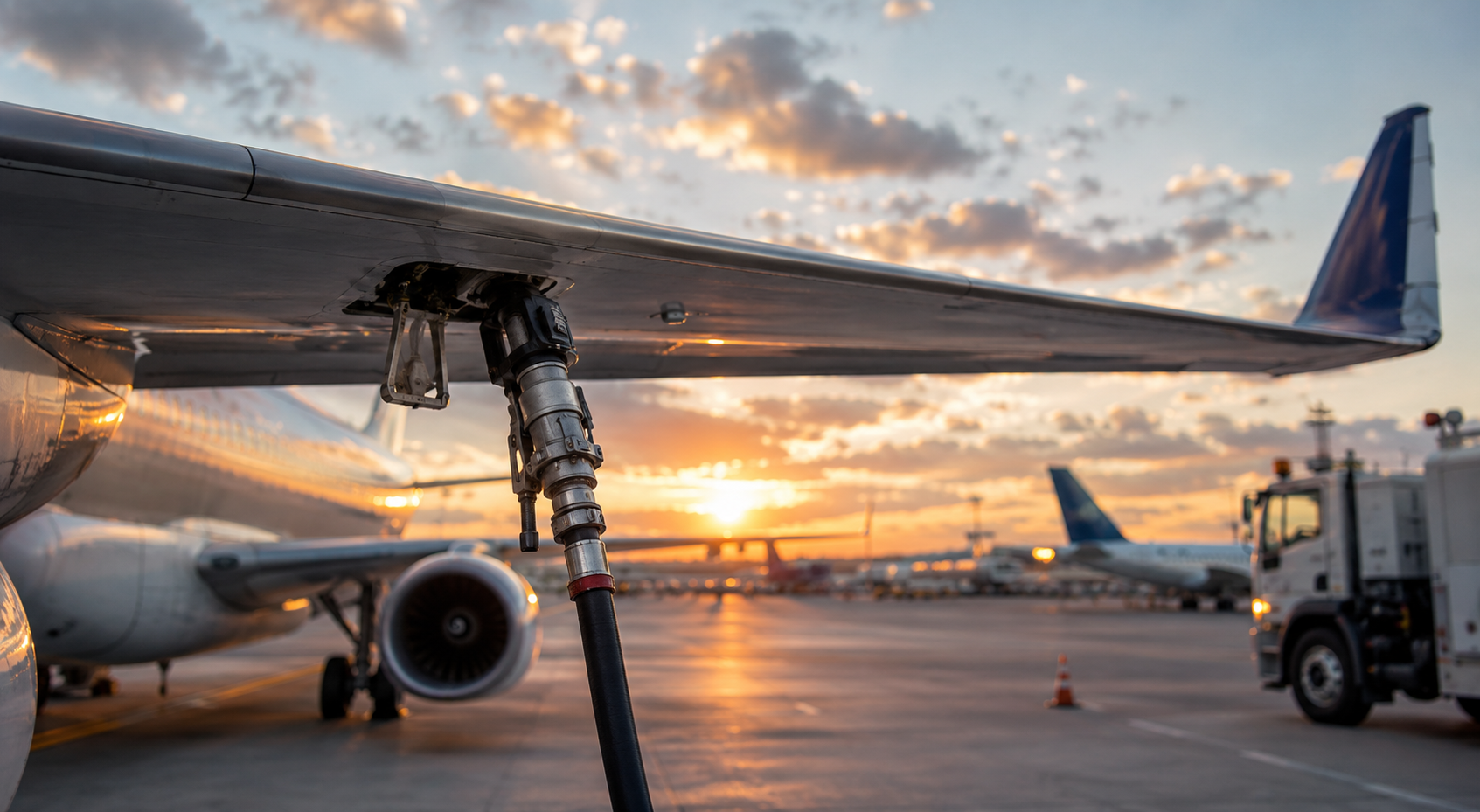
Europe Holds Firm Against Jet Fuel Supply Shock
Despite one of the most significant disruptions to global energy markets in recent years, European aviation authorities say there is currently no indication that airlines across the continent will face jet fuel shortages in the months ahead.
The prolonged conflict involving Iran and the resulting restrictions in the Strait of Hormuz have dramatically altered global oil flows, removing an estimated 14 million barrels per day from international markets. The disruption represents roughly 14% of worldwide oil demand and has triggered substantial volatility across energy and transportation sectors.
Yet European officials remain cautiously optimistic that the aviation industry can continue operating without major fuel supply interruptions, thanks largely to diversified import sources and strategic emergency reserves.
European Union Transport Commissioner Apostolos Tzitzikostas said that while fuel prices remain a significant concern, supply availability itself is not currently viewed as a critical threat.
The statement comes as airlines across Europe assess the long-term implications of elevated fuel costs and a potentially prolonged geopolitical crisis in one of the world’s most important energy corridors.
Alternative Supply Chains Help Stabilize the Market
Europe’s resilience stems in part from its ability to source aviation fuel from regions outside the Middle East.
Historically, the Middle East has supplied approximately one-fifth of Europe’s imported jet fuel. However, since disruptions began in the Gulf region, increased shipments from the United States and Nigeria have helped compensate for reduced availability from traditional suppliers.
The diversification highlights a structural advantage for Europe compared with regions that remain more dependent on Gulf energy exports.
Industry analysts note that refiners and fuel distributors have spent years building more flexible procurement networks following previous energy crises, including the COVID-19 recovery period and the supply disruptions that followed Russia’s invasion of Ukraine.
These adjustments have allowed European fuel markets to adapt more effectively to the latest geopolitical shock.
Furthermore, EU member states maintain strategic petroleum reserves designed specifically to cushion temporary supply disruptions. Officials have emphasized that these emergency stocks remain available if market conditions deteriorate further.
For now, however, authorities do not believe there is a need to tap those reserves.
Airlines Face Mounting Cost Pressure
While fuel availability has remained stable, the cost of obtaining that fuel is becoming increasingly problematic for airlines.
Jet fuel typically accounts for between 25% and 30% of an airline’s operating expenses, making it one of the industry’s largest cost categories alongside labor and aircraft ownership.
As crude oil prices have climbed sharply since the onset of the crisis, airlines have been forced to absorb significantly higher operating costs.
Market forecasts suggest oil could average around $90 per barrel this year, representing an increase of roughly 40% compared with levels seen earlier in the year.
The consequences are already becoming visible across airline networks.
Several carriers have begun eliminating routes that generate weak profit margins, particularly services connecting smaller regional markets. Routes that may have remained viable under lower fuel-price environments are now facing renewed scrutiny as airlines prioritize profitability and operational efficiency.
According to European officials, regional airports are likely to be the most vulnerable as airlines continue reviewing network performance.
Less profitable destinations could face reduced frequencies or complete suspension if fuel prices remain elevated for an extended period.
Why Passengers May Not Feel the Impact Immediately
Although fuel prices have surged, travelers may not yet see dramatic increases in ticket prices.
Many airlines use fuel-hedging strategies that allow them to lock in fuel costs months or even years in advance. These financial arrangements protect carriers from sudden spikes in market prices and provide greater cost certainty.
As a result, the immediate financial impact of higher oil prices is being partially absorbed through existing hedge positions.
However, industry observers caution that this protection is temporary.
As hedging contracts expire over the coming months, airlines will increasingly need to purchase fuel at prevailing market rates. If current price levels persist, carriers may eventually pass a portion of those costs on to passengers through higher fares.
The timing and magnitude of any fare increases will vary significantly among airlines depending on their individual hedging strategies, route structures, and financial strength.
Some low-cost carriers may face greater pressure because fuel expenses represent a particularly important component of their business models.
The Strait of Hormuz Remains the Key Variable
The future trajectory of aviation fuel markets will depend heavily on developments in the Strait of Hormuz.
The narrow waterway serves as one of the world’s most strategically important maritime chokepoints, connecting Gulf oil producers to customers across Europe, Asia, and North America.
A sustained disruption creates challenges not only for aviation but also for shipping, manufacturing, power generation, and broader economic activity.
European policymakers have repeatedly stressed the importance of restoring normal shipping operations through the strait as quickly as possible.
While diplomatic discussions between Tehran and Washington have continued since the ceasefire reached earlier this year, progress has been limited. Multiple reported violations and ongoing tensions have fueled uncertainty about the long-term outlook.
Even if negotiations eventually produce a new agreement, energy market analysts warn that shipping conditions may not immediately return to pre-crisis levels.
This uncertainty is forcing businesses throughout the aviation supply chain to prepare for a prolonged period of elevated fuel costs.
Wider Economic Risks Extend Beyond Aviation
The implications of the crisis stretch far beyond airlines and airports.
Economists increasingly warn that sustained energy market disruptions could undermine global economic growth, particularly if oil prices remain elevated through the remainder of the year.
Higher energy costs affect virtually every sector of the economy by increasing transportation expenses, manufacturing costs, and consumer prices.
The Organisation for Economic Co-operation and Development (OECD) has warned that a prolonged disruption could significantly weaken global growth, potentially pushing economic activity toward levels associated with previous major downturns such as the 2008-2009 financial crisis or the COVID-19 recession.
For aviation, slower economic growth could create a second challenge beyond rising fuel costs.
Historically, weaker economies lead to reduced business travel, softer leisure demand, and lower cargo volumes. Airlines would therefore face pressure from both rising expenses and potentially weaker revenue generation.
Stability for Now, Uncertainty Ahead
For the moment, Europe’s aviation sector appears to have avoided the worst-case scenario.
Fuel remains available, supply chains continue functioning, and emergency reserves provide an additional safety net should conditions worsen.
Nevertheless, the industry is entering a period of heightened uncertainty.
Airlines are already adjusting networks, fuel costs remain elevated, and the geopolitical situation that triggered the disruption remains unresolved. The longer instability persists in the Gulf region, the greater the likelihood that today’s manageable challenge evolves into a broader aviation and economic problem.
Europe’s ability to diversify fuel imports has bought valuable time, but the ultimate outlook for airlines, passengers, and the wider economy will depend largely on whether energy flows through the Strait of Hormuz can return to normal in the months ahead.
For more on Europe, see: Europe Faces Jet Fuel Squeeze as Hormuz Risks Deepen











Leave a Reply