
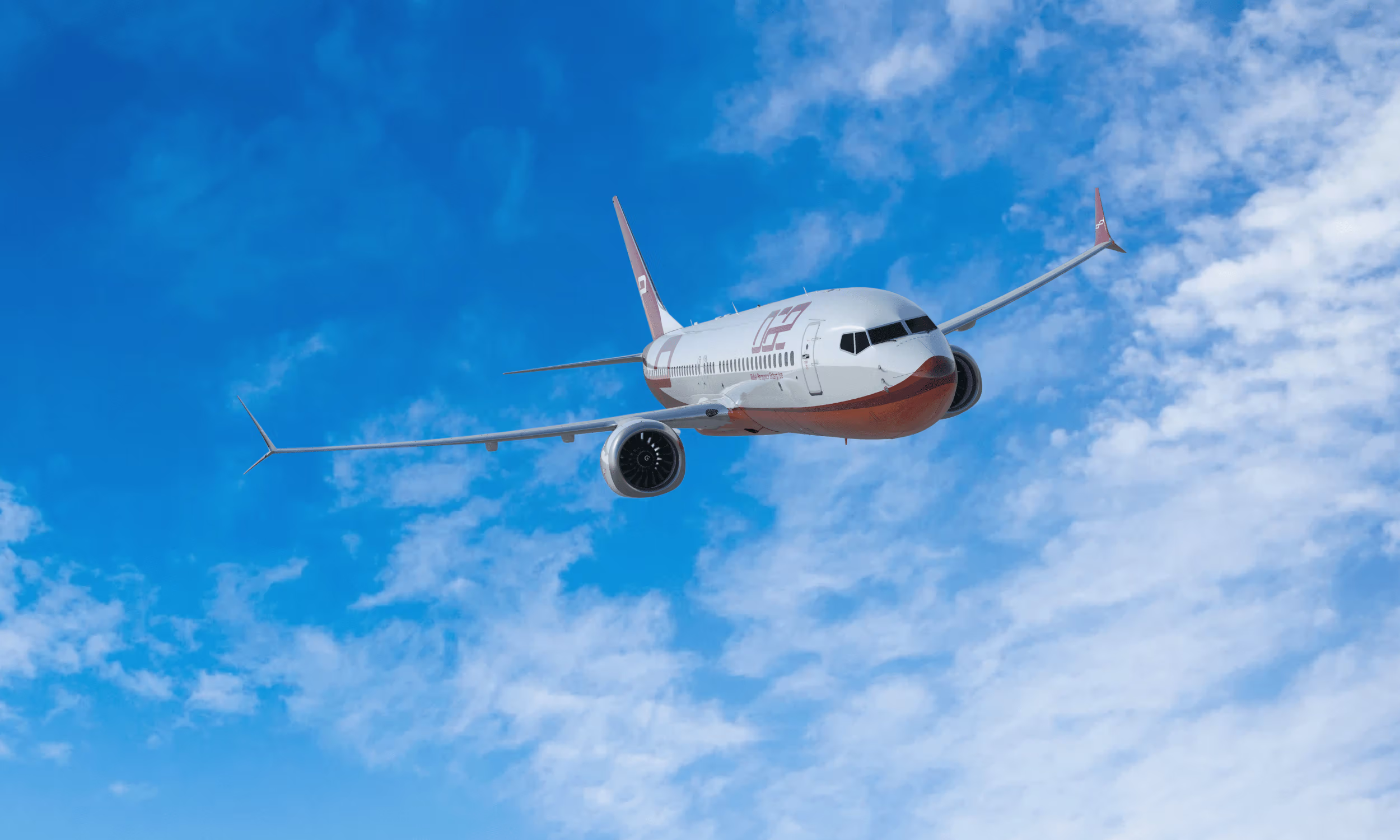
Dubai Aerospace Enterprise has agreed to acquire Macquarie AirFinance in a transaction valued at approximately $7 billion, a move that will more than double its aircraft portfolio and firmly reposition the Dubai-based lessor among the industry’s top global players. The agreement, subject to regulatory approvals and customary closing conditions, is expected to conclude in the second half of 2026.
When finalized, the combined business will manage a pro forma fleet of 1,029 owned, managed and committed aircraft serving 191 airline customers across 79 countries. In an industry where scale directly influences funding costs, risk diversification and negotiating leverage, that step change is substantial.
Scale That Redefines the Platform
Before the acquisition, DAE oversaw a fleet of roughly 700 aircraft with an estimated asset value of about $25 billion. The addition of Macquarie AirFinance’s 352 aircraft portfolio — including committed orders — significantly alters that balance sheet. By year-end 2024 benchmarks, DAE’s fleet size will effectively have doubled once the integration is complete.
The enlarged platform will be weighted toward narrow-body aircraft, which will account for approximately 70% of the combined fleet. That mix mirrors broader airline demand trends. Single-aisle jets continue to dominate global order books as carriers prioritize fuel efficiency, route flexibility and high-frequency short- to medium-haul operations.
Macquarie AirFinance brings with it a geographically diverse asset base spanning 48 countries. Its portfolio includes 191 Airbus aircraft and 134 Boeing aircraft, alongside other types. Integrating those assets will expand DAE’s airline relationships by 37 new customers, including operators in seven countries where DAE previously had no presence.
For a leasing company, those new markets matter. Airline credit exposure is cyclical and regionally sensitive. Diversifying across nearly 80 countries spreads risk and cushions against localized downturns.
Financing Discipline and Credit Strategy
DAE has indicated the acquisition will be funded through a combination of debt and equity, structured to preserve its current investment-grade credit ratings. Maintaining that status is not cosmetic — it underpins the company’s cost of capital. In aircraft leasing, even modest shifts in borrowing spreads can materially influence lease rate factors and return on equity.
Management has also signaled that the enlarged balance sheet could support a future rating upgrade. If realized, that would further reduce funding costs and enhance competitive positioning when bidding on new aircraft or sale-leaseback transactions.
The company’s measured approach reflects lessons learned across previous industry cycles. The leasing sector has historically been vulnerable to over-leveraging during expansionary phases. By emphasizing prudent financing, DAE is aiming to expand without compromising credit resilience.
A Consolidating Industry
The acquisition underscores an accelerating consolidation trend within the aircraft leasing market. Over the past decade, the sector has evolved from a fragmented landscape into one dominated by large, globally financed platforms.
Several structural forces are driving that shift:
- Aircraft unit costs have climbed, with new-generation narrow-bodies frequently priced between $50 million and $130 million depending on configuration and discounting.
- Manufacturers’ production constraints have tightened delivery pipelines, increasing competition for available slots.
- Airlines are increasingly favoring sale-leaseback transactions to preserve liquidity, which benefits lessors with deep capital pools.
In this environment, scale translates into bargaining power — both with aircraft manufacturers and airline customers. Larger lessors can negotiate pricing, secure early delivery positions, and structure complex financing packages more efficiently than smaller rivals.
DAE’s acquisition of Macquarie AirFinance is therefore not simply additive; it is defensive positioning in a market where relative size increasingly determines relevance.
Building on Previous Expansion
This is not DAE’s first major growth initiative in recent years. In 2024, the company completed the acquisition of Nordic Aviation Capital in a transaction valued at roughly $2 billion, adding more than 250 regional aircraft to its portfolio. That move broadened DAE’s exposure to turboprops and regional jets.
By contrast, the Macquarie deal strengthens DAE’s core narrow-body base — the segment currently experiencing the strongest global demand. The combination of regional aircraft expertise and expanded single-aisle scale provides portfolio balance across different airline operating models.
Collectively, the two acquisitions represent a rapid expansion phase. Within roughly 18 months, DAE will have doubled the size of its franchise.
Operational Integration and Synergies
Integrating more than 350 additional aircraft is operationally complex. Lease documentation, maintenance reserves, technical records, financing arrangements and asset management systems must be aligned. Human capital integration is equally important, particularly when absorbing experienced leasing teams and relationship managers.
However, there are tangible efficiencies to be gained:
- Broader financing channels and stronger lender relationships
- Enhanced portfolio trading flexibility
- Increased negotiating leverage with OEMs
- More diversified revenue streams across regions
Management has expressed confidence that its existing platform is capable of absorbing the additional scale without disruption. Execution discipline will ultimately determine how quickly those synergies translate into measurable financial performance.
Implications for Airlines
For airline customers, the enlarged DAE platform could mean greater access to capital and aircraft availability. Larger lessors are often better positioned to offer customized leasing solutions, including fleet transitions, interim lift coverage, and structured financing arrangements.
As airlines navigate fluctuating fuel costs, delivery delays and capacity planning challenges, relationships with well-capitalized lessors become strategically important. The acquisition broadens DAE’s ability to serve carriers across different credit profiles and operating models.
Regional Significance
The deal also highlights the Middle East’s expanding footprint in aviation finance. Dubai has long been a central aviation hub, but this transaction reinforces its growing influence on the financial side of the industry as well.
By strengthening DAE’s global position, the acquisition aligns with broader economic diversification strategies aimed at deepening financial services capabilities beyond traditional sectors.
What Comes Next
The transaction remains subject to regulatory approvals in relevant jurisdictions. Cross-border mergers of this scale typically undergo detailed review, particularly in markets where aircraft leasing plays a material role in airline financing.
Assuming approvals proceed as expected, closing is anticipated in the second half of 2026.
Once complete, DAE will oversee more than 1,000 aircraft — a symbolic and practical milestone. In a sector where portfolio depth underpins resilience, that threshold carries weight.
The acquisition of Macquarie AirFinance signals that DAE is not content with incremental growth. It is pursuing scale deliberately, with an eye toward long-term positioning in an industry where capital strength and global reach increasingly define success.
If integration is handled effectively and financing remains disciplined, the enlarged company will emerge as a formidable competitor in the aircraft leasing market — one equipped with the fleet depth, geographic diversification and balance sheet capacity to navigate the next cycle of global aviation demand.
For more on DAE, see: DAE posts strong 2025 results on fleet expansion push











Leave a Reply