
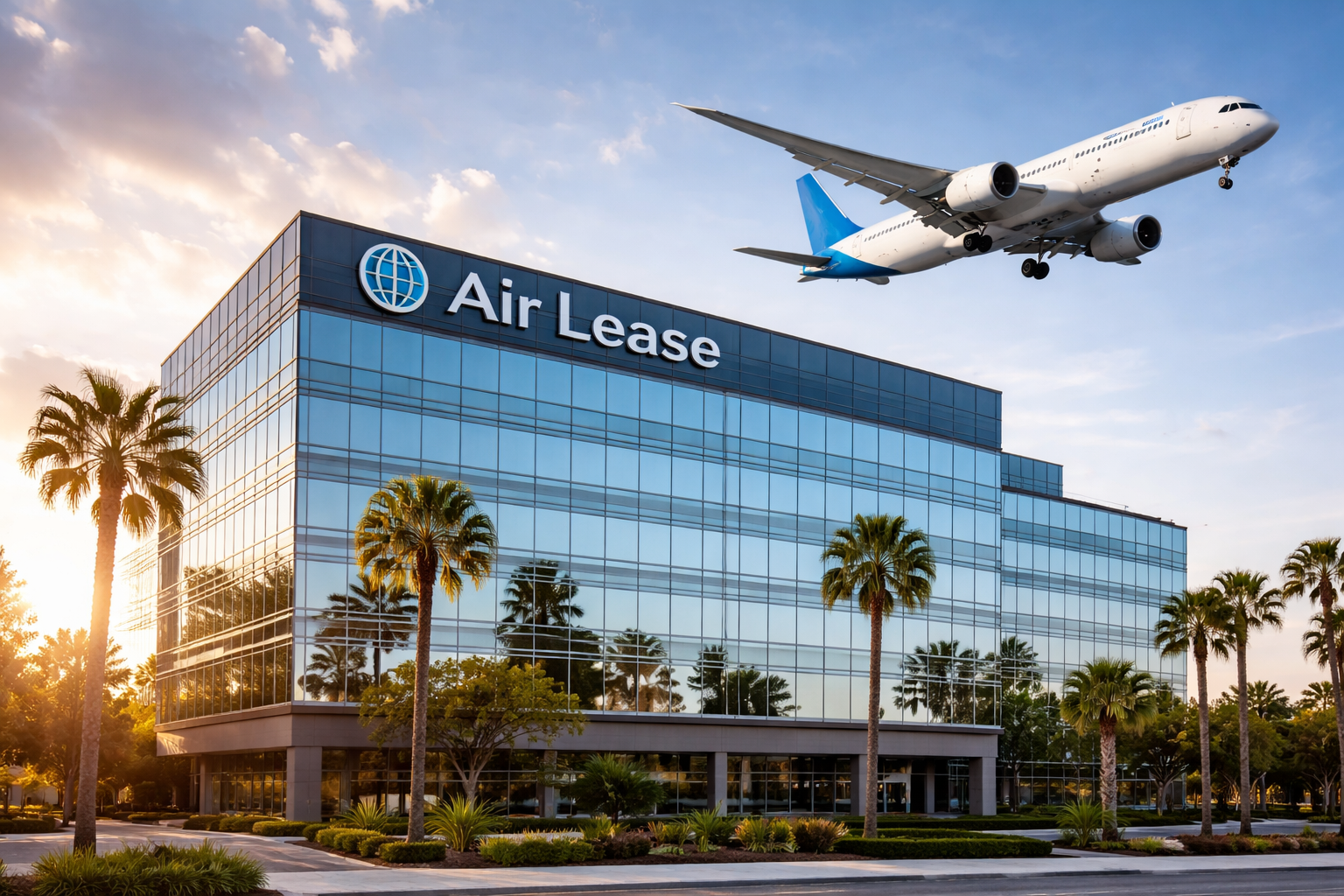
Air Lease Corporation has crossed a critical threshold in its proposed sale, with shareholders voting overwhelmingly to approve the company’s acquisition by a newly formed Dublin-based holding company. The decision clears one of the final major hurdles in a transaction that will take the Los Angeles–headquartered aircraft lessor private and reshape its position within the global aviation finance landscape.
At a special meeting of stockholders, holders of Air Lease Class A common stock voted to approve the previously announced merger agreement under which the company will be acquired by Sumisho Air Lease Corporation DAC. Approximately 80.7% of the outstanding Class A shares eligible to vote supported the transaction, based on shareholdings recorded as of November 3, 2025.
The strong endorsement reflects broad shareholder acceptance of both the valuation and the strategic rationale behind the deal, which was first announced in early September. Under the terms of the agreement, Class A shareholders will receive USD 65.00 in cash for each share held immediately prior to the completion of the merger.
Upon closing, Air Lease will be renamed Sumisho Air Lease Corporation, formally aligning the business with its new ownership structure and marking the end of its nearly 15-year run as a publicly traded company on the New York Stock Exchange.
A defining moment for Air Lease
John L. Plueger, Chief Executive Officer and President of Air Lease, described the vote as a turning point for the company.
“We are pleased with the results from our special meeting and thank our stockholders for their support,” Plueger said following the approval. “Today marks a major milestone for Air Lease. We look forward to completing this transaction.”
The final voting results will be disclosed in a Current Report on Form 8-K to be filed with the U.S. Securities and Exchange Commission, as required for material corporate actions involving publicly listed companies.
While shareholder approval was widely anticipated, given the premium implied by the offer price relative to the company’s recent trading range, the vote provides formal validation of the deal and allows management to shift focus toward regulatory clearances and closing logistics.
Ownership structure blends strategic and financial firepower

The acquiring entity, Sumisho Air Lease Corporation DAC, will be owned by a consortium that brings together long-term strategic aviation investors and global alternative asset managers. The ownership group includes Sumitomo Corporation, SMBC Aviation Capital Limited, and investment vehicles affiliated with funds managed by Apollo and Brookfield.
Each partner brings a distinct capability set. Sumitomo, one of Japan’s largest trading houses, has steadily expanded its aviation portfolio over the past decade, viewing aircraft leasing as a core infrastructure-like asset class with stable cash flows and global diversification. SMBC Aviation Capital, itself among the world’s largest aircraft lessors, contributes deep technical expertise, airline relationships, and an established global operating platform.
Apollo and Brookfield add scale, balance sheet depth, and capital markets sophistication. Their involvement underscores the continued appeal of commercial aircraft as long-lived, income-generating assets at a time when institutional investors are seeking alternatives to traditional fixed income.
The consortium structure also reflects a broader trend within aviation finance: the convergence of industrial leasing expertise and private capital as fleet renewal accelerates and manufacturers struggle to meet demand.
From public markets to private ownership
If completed as planned, the transaction will bring an end to Air Lease’s tenure as a publicly listed company. Founded in 2010 and listed in 2011, Air Lease quickly established itself as a leading lessor by focusing on new aircraft placements, disciplined credit underwriting, and close relationships with Airbus and Boeing.
However, public market valuations of aircraft lessors have often lagged underlying asset values, particularly during periods of macroeconomic volatility, interest rate swings, or geopolitical disruption. Going private offers the opportunity to pursue longer-term strategies without the quarterly earnings pressure and valuation scrutiny that come with public ownership.
For Air Lease, private ownership could provide greater flexibility in fleet trading, capital allocation, and balance sheet management, particularly as aircraft prices rise and delivery slots become increasingly scarce.
Timeline and remaining approvals
The transaction is expected to close in the first half of 2026, subject to the satisfaction of customary closing conditions. These include regulatory approvals across multiple jurisdictions and the absence of material adverse changes affecting the business.
Details of the conditions are set out in the definitive proxy statement filed with U.S. regulators in early November 2025, which was subsequently supplemented later in the month. Once the deal closes, Air Lease shares will be delisted from the NYSE.
For the broader market, Air Lease’s departure from public markets will reduce the number of large, pure-play aircraft lessors available as public comparables, potentially increasing the relative prominence of remaining listed peers.
A lessor with global reach and a modern fleet
Air Lease Corporation is headquartered in Los Angeles and specializes in purchasing new commercial aircraft directly from manufacturers and leasing them to airline customers worldwide. The company’s business model emphasizes a young fleet, long-term leases, and exposure to growth markets.
As of 2025, Air Lease’s customer base spans airlines across Asia-Pacific, Europe, the Middle East, Africa, and the Americas. Its orderbook is heavily weighted toward next-generation narrowbody aircraft, reflecting airline demand for fuel efficiency, lower emissions, and operational flexibility.
That focus has proven well aligned with market conditions. Airlines continue to prioritize narrowbody aircraft as they rebuild capacity, launch new point-to-point routes, and manage costs in an environment of elevated fuel prices and tighter environmental regulation.
Continued investment momentum ahead of the sale
Despite the pending acquisition, Air Lease has continued to deploy capital into fleet growth. In the third quarter of 2025 alone, the company reported aircraft investments totaling approximately USD 685 million.
During that period, Air Lease delivered 13 new aircraft to customers. These included two Airbus A220s, two Airbus A321neos, six Boeing 737-8s, and three Boeing 737-9s. Most of the investment activity occurred in the first half of the quarter and was drawn from the company’s existing orderbook.
The delivery mix highlights the types of aircraft currently in highest demand. The A220 serves both regional and thin mainline routes, while the A321neo has become a workhorse for airlines seeking additional range and capacity within a narrowbody footprint. The 737-8 and 737-9 remain central to fleet renewal plans globally, despite ongoing production constraints.
These investments underscore Air Lease’s confidence in long-term demand for modern aircraft and its commitment to maintaining a competitive, fuel-efficient fleet.
Strategic implications for the leasing sector
The Air Lease transaction is one of the most significant ownership changes in aircraft leasing in recent years and adds momentum to a broader consolidation trend within the sector.
As aircraft manufacturers struggle with supply chain disruptions and extended delivery timelines, scale has become an increasingly important competitive advantage for lessors. Larger platforms benefit from stronger negotiating leverage, diversified funding sources, and the ability to place aircraft across a wider range of airline customers.
The involvement of Apollo and Brookfield also highlights how aircraft leasing has become more closely integrated with the broader infrastructure and real assets investment universe. For institutional investors, leased aircraft offer predictable cash flows, global exposure, and residual value upside, particularly for in-demand narrowbody types.
Looking beyond closing
Assuming the transaction proceeds on schedule, the first half of 2026 will mark the formal transition of Air Lease into its new identity as Sumisho Air Lease Corporation. While near-term operations are expected to remain largely unchanged, the new ownership structure may influence longer-term strategy, including fleet composition, growth pace, and capital structure.
For shareholders, the deal delivers immediate liquidity at a fixed price, crystallizing value amid a still-uncertain macroeconomic backdrop. For the industry, it reinforces the strategic importance of aircraft leasing as airlines continue to rely on lessors to manage capacity, capital intensity, and fleet renewal.
As Air Lease prepares to close this chapter, attention will turn to how its new owners leverage the platform in a market defined by strong demand for modern aircraft, constrained supply, and an aviation industry recalibrating for sustainable long-term growth.
For more on Air Lease, see: Air Lease on Steady Climb: $685 Million in Investments, 13 New Aircraft, and a Disciplined Growth Outlook



Leave a Reply