
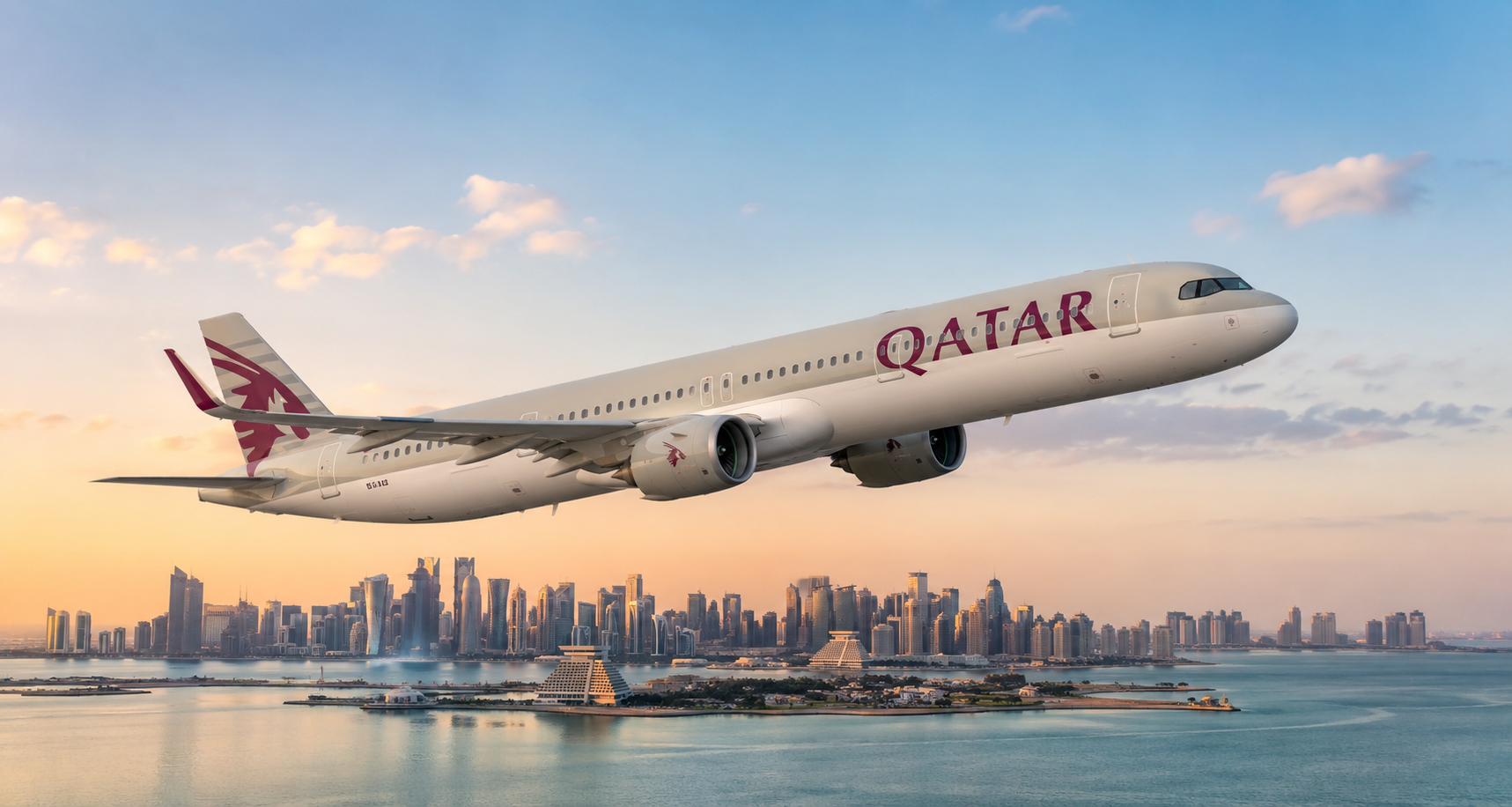
Qatar Airways is preparing to introduce its long-awaited Airbus A321neo aircraft into scheduled passenger service, signaling a major milestone in the airline’s fleet modernization strategy. After years of uncertainty surrounding the aircraft program, the Doha-based carrier appears ready to deploy the high-capacity narrowbody jet on regional routes, while simultaneously reinforcing its long-haul fleet through fresh financing agreements for additional Airbus A350-1000 aircraft.
The planned return of the Airbus A321neo represents far more than the launch of another aircraft type. It reflects the airline’s renewed focus on expanding capacity across high-demand regional markets while optimizing fleet efficiency. At the same time, Qatar Airways continues to invest heavily in its widebody operations, ensuring that both short-haul and long-haul growth remain central to its future strategy.
A321neo Set for Commercial Debut
According to preliminary winter scheduling information published by Aeroroutes, Qatar Airways intends to begin operating its Airbus A321neo on flights between Doha’s Hamad International Airport and Istanbul Sabiha Gökçen Airport from September 16, 2026, although the schedule remains subject to final confirmation.
If introduced as planned, the aircraft will operate:
- QR241: Depart Doha at 7:45 a.m., arriving in Istanbul at 12:10 p.m.
- QR242: Depart Istanbul at 1:35 p.m., arriving back in Doha at 5:45 p.m.
While airlines routinely adjust schedules before launch, listing the aircraft in reservation systems is generally viewed as an important step toward commercial entry into service.
The deployment would mark the first regular passenger operations for Qatar Airways’ Airbus A321neo fleet after an unusually lengthy and complicated journey to the airline.
A Different Kind of Qatar Airways Aircraft
Unlike most aircraft currently flying in Qatar Airways’ narrowbody fleet, the Airbus A321neo has been configured with an exceptionally high-density layout.
Each aircraft features 236 all-economy seats arranged in a single-class configuration.
That configuration differs significantly from the airline’s traditional product strategy, which usually emphasizes premium cabins, including Business Class and, on selected aircraft, its award-winning Qsuite product.
Instead, these A321neos have been designed to maximize passenger capacity on routes where demand is consistently high but does not justify operating larger widebody aircraft.
The strategy allows Qatar Airways to increase available seats while benefiting from the improved fuel efficiency and lower operating costs offered by Airbus’ latest-generation single-aisle aircraft.
Istanbul Chosen as the Launch Route
The planned introduction on the Doha–Istanbul Sabiha Gökçen route is no coincidence.
Sabiha Gökçen has become one of the busiest regional destinations served by Qatar Airways, with strong demand generated by tourism, business travel, and onward international connections through Doha.
Deploying the 236-seat Airbus A321neo enables the airline to significantly increase daily seat capacity while avoiding the higher operating costs associated with larger widebody aircraft.
The aircraft also provides greater flexibility for frequency planning and seasonal demand management.
As travel demand across the Middle East and Europe continues to strengthen, the A321neo is expected to become an important part of Qatar Airways’ regional network strategy.
A Long Road to Service
The arrival of the Airbus A321neo has been anything but straightforward.
Qatar Airways originally placed an order for 50 Airbus A321neo aircraft, viewing the type as a cornerstone of its future short- and medium-haul operations.
The aircraft were expected to replace older narrowbody jets while opening opportunities to expand service on routes requiring more capacity than previous-generation aircraft but less than widebody operations.
However, those plans were dramatically disrupted during the highly publicized dispute between Qatar Airways and Airbus over paint and surface degradation issues affecting the Airbus A350 fleet.
The disagreement escalated into legal proceedings and ultimately resulted in Airbus canceling Qatar Airways’ A321neo order.
At the time, Airbus stated that terminating the order was consistent with its contractual rights.
The cancellation left Qatar Airways without one of its most important future fleet assets and forced the airline to reconsider its narrowbody strategy.
Order Eventually Restored
Relations between the airline and Airbus eventually improved following a settlement of the dispute.
The resolution paved the way for the reinstatement of Qatar Airways’ Airbus A321neo program, allowing deliveries to resume after years of uncertainty.
Industry observers were surprised when Qatar Airways confirmed that the aircraft would enter service with an all-economy configuration instead of offering a premium cabin.
Given the airline’s reputation for luxury travel and premium service, many had expected at least a dual-class layout.
Instead, Qatar Airways appears to be targeting high-volume regional markets where maximizing seat capacity delivers stronger commercial returns than offering premium seating.
The decision also aligns with broader industry trends, as airlines increasingly deploy high-density narrowbody aircraft on short- and medium-haul routes to improve operating economics.
Aircraft Temporarily Found New Homes
Adding another chapter to the aircraft’s unusual history, several Airbus A321neos delivered to Qatar Airways spent time flying for another airline before returning to Doha.
Following delivery delays and fleet planning adjustments, Qatar Airways allowed several aircraft to be leased to Indian low-cost carrier IndiGo.
Aircraft including A7-AJD, A7-AJF, and A7-AJG were among those operating for IndiGo under lease arrangements after deliveries.
The temporary placement allowed the aircraft to remain commercially active while Qatar Airways finalized its own operational plans.
Now, with the airline preparing to place the aircraft into scheduled service, the A321neo fleet is finally expected to begin fulfilling the role originally envisioned when the aircraft were first ordered.
Supporting Continued Regional Growth
The Airbus A321neo is expected to become a critical component of Qatar Airways’ evolving regional network.
Compared with previous-generation narrowbody aircraft, the A321neo offers numerous operational advantages, including:
- Lower fuel consumption
- Reduced carbon emissions
- Longer operating range
- Lower maintenance costs
- Higher passenger capacity
These characteristics make it particularly well suited to routes linking Doha with destinations across the Middle East, Europe, South Asia and parts of Africa.
As Hamad International Airport continues expanding its role as one of the world’s leading global hubs, efficient narrowbody aircraft will become increasingly important in feeding passengers onto the airline’s extensive long-haul network.
The A321neo provides exactly that flexibility.
Qatar Airways Also Expands A350 Financing
While attention has focused on the narrowbody fleet, Qatar Airways is simultaneously reinforcing its long-haul operations through a new financing agreement involving its Airbus A350-1000 fleet.
Singapore-based aircraft lessor BOC Aviation announced on June 30, 2026, that it has completed a purchase-and-leaseback agreement covering three Airbus A350-1000 aircraft already delivered to Qatar Airways.
The aircraft have been placed on long-term operating leases, providing Qatar Airways with additional financial flexibility while allowing it to retain operational control of the aircraft.
Sale-and-leaseback agreements have become an increasingly popular financing tool among airlines seeking to preserve liquidity while continuing fleet expansion.
Rather than tying up significant capital in aircraft ownership, airlines can redirect funds toward network growth, operational investments and future aircraft deliveries.
Longstanding Partnership with BOC Aviation
The latest transaction further strengthens a relationship that spans more than a quarter-century.
BOC Aviation and Qatar Airways have worked together since 1999, completing numerous financing transactions across multiple aircraft programs.
Their collaboration has included:
- Six Airbus A350 aircraft under a purchase-and-leaseback agreement signed in 2016.
- Three additional Airbus A350s financed in 2019.
- The latest agreement covering three Airbus A350-1000 aircraft delivered in 2026.
Commenting on the announcement, Steven Townend, Chief Executive Officer and Managing Director of BOC Aviation, highlighted the importance of the partnership.
He said the company was pleased to finance its first Airbus A350-1000 aircraft for Qatar Airways while continuing a relationship that has remained strong through changing market conditions.
Townend also noted that BOC Aviation deliberately strengthened its liquidity position earlier in 2026 to support high-quality transactions like this one and described Qatar Airways as one of the lessor’s largest and most valued customers.
Building One of the World’s Youngest Fleets
Qatar Airways has consistently invested in maintaining one of the youngest and most technologically advanced fleets in global aviation.
According to ch-aviation fleet data, the airline currently operates 28 Airbus A350-1000 aircraft, with 14 additional aircraft still scheduled for delivery.
The Airbus A350-1000 serves as the backbone of Qatar Airways’ long-haul operations, connecting Doha with destinations across North America, Europe, Asia, Australia and Africa.
The aircraft combines excellent fuel efficiency with long-range performance and a premium passenger experience, making it one of the airline’s flagship aircraft.
Beyond BOC Aviation, Qatar Airways has also completed similar financing transactions with major aircraft leasing companies, including Avolon, which previously purchased and leased back five Airbus A350-1000 aircraft.
These agreements form part of a broader capital management strategy that enables Qatar Airways to continue expanding while maintaining financial flexibility.
Positioning for the Next Phase of Growth
The simultaneous introduction of the Airbus A321neo and continued investment in the Airbus A350-1000 fleet underline Qatar Airways’ long-term growth ambitions.
The airline is effectively balancing regional expansion with global connectivity by deploying aircraft tailored to different market demands.
The A321neo will allow Qatar Airways to increase frequencies, serve high-density regional markets more efficiently, and optimize operating costs. Meanwhile, the expanding A350-1000 fleet ensures the carrier remains well positioned to meet growing demand on intercontinental routes while supporting its premium service standards.
Together, these developments demonstrate a carefully balanced fleet strategy designed to strengthen Qatar Airways’ competitive position across both short-haul and long-haul markets. As new aircraft continue entering service and financing partnerships remain strong, the airline appears well equipped to support its next phase of network expansion from Hamad International Airport and reinforce its status as one of the world’s leading global carriers.
For more on Qatar Airways, see: Qatar Airways Ends Airbus A380 Service to Sydney

Leave a Reply